
Single Estate Highland Malt
Despite all the stormy headwinds buffeting the Scotch industry, there are still bold entrepreneurs out there seeking to open new distilleries and build new brands. Ron Emler talks to the veteran distillery architect and whisky consultant, Gareth Roberts about his latest project …
"From the barley field to the bottle in your hand, every element of our whisky comes from one place." This declaration of intent is from the website of the Inverurie distillery that has just received planning permission. Due to go into production next year, its mission is to produce as near a "single estate" malt whisky as is possible to make.
"Grain, energy and water, everything will be sourced from this place," the website continues. "The River Don provides our water, estate woodland fuels our stills, spent grains will feed local cattle and even oak shavings will smoke the meat (that will be sold) in The Larder. Nothing is wasted; everything is connected."
The grand design is a sustainable circular system with each operation supporting another. Right now, however, the former stable block that will house the distillery is open to the skies. Re-roofing is just beginning and most of the specifications are on the drawing board of co-founder and project director Gareth Roberts.
With more than 70 distillery projects under his belt (most of them in Scotland), Gareth is selective about his commissions. At present he has a "small number" on the go, including the revival of The Oxford Artisan Distillery – but Inverurie is his main focus.
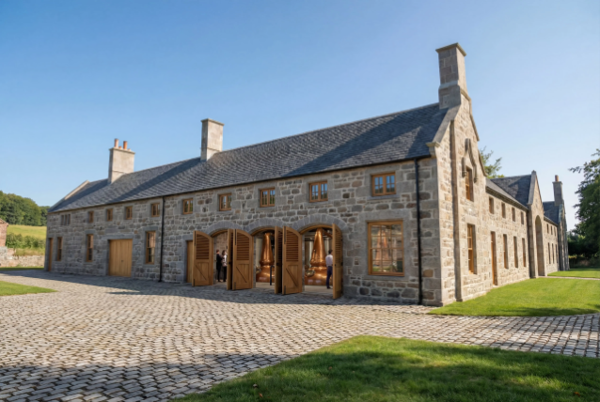
It all began when drinks veteran Jonathan Dunne (formerly of Taunton Cider) came across the decaying property. He knew the only way to save the elegant granite building was to put it to use and so asked Gareth if it could be viable as a distillery.
"Apart from the roof, it was sound enough", he says. "Based on my experience with building a similar size of distillery plant at Nc'Nean and Ardnamurchan in Argyll, I immediately said 'Yes', I knew we could fit everything in."
They got together with David Fyffe, the owner of the surrounding Fetternear Estate in which the building languished and began planning.
A deal has been forged under which David will provide some of the barley and wood for the sizeable biomass boiler being planned, while Jonathan will bring the drinks industry contacts and expertise to launch Inverurie whisky onto the market. Gareth is designing and managing the construction and the delivery of the process equipment.
What will be the stillhouse is the old stable block, built in the mid-19th century but now a 'building at risk'. The adjacent area was once the seat of the Aberdeen Bishops, containing the ruined Bishop's Palace, with records dating back to 1157.
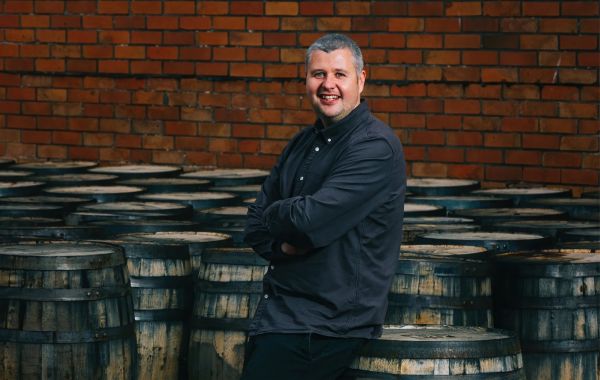
"There's so much history and this is a beautiful place which we are trying hard not to change much at all," says Gareth, "The main planning question to overcome was process noise." Permission was granted earlier this year.
Inverurie will initially produce 400,000 litres of pure alcohol a year (not necessarily all Scotch), with the potential to double capacity in future. The founders have also discussed sourcing extra barley and biomass supplies with neighbouring farmers to preserve the single location concept.
"Craft whisky is gradually taking the position in the market that blends had, but slowly. The market is telling us: 'Don't make too much whisky'," says Gareth.
"What we really want is to create a traditional, very high-quality spirit that doesn't have to lean on the cask for its interest. We are going to make a weighty Highland spirit, something that's got a lot of character to it." He cites Ardbeg and the old Glendronach as exemplars.
"Hardly anyone's done that in the past 15 years for fear of scaring the public off an easy-drinking whisky. We are designing quite an unusual thing for a new craft distiller", he says. "We're planning the process design to make that style of whisky by producing a cloudy wort from the shape of the stills and likely upward facing line arms."
The power will come from a huge biomass boiler "as large as two double decker busses," says Gareth. As well as being a sustainable and renewable source, it won't be subject to geopolitics and whatever's happening in the Straight of Hormuz. A similar boiler has recently been installed at Brora by the same team.
It will be fired by timber from Fetternear and nearby estates, with the forests replenished with a replanting system that will generate more local jobs. There are also long-term plans for a restaurant and events venue, even possibly a hotel.
"We are going to mature everything on site and do as much energy production as we can, so while we may not be the only single estate whisky, Inverurie will be one of the most autonomous and secure," says Gareth.
Ron Emler is a financial journalist who has observed the drinks industry for 50 years. Following a career on The Times and the Sunday Telegraph, he is consultant City Editor at The Drinks Business.