
A Dram with Andrew Symington
With a forty year career as an independent whisky bottler, Andrew Symington has experienced the industry's rhythms of boom and bust at first hand. The current surfeit of stock is gold dust for such a canny operator as Ian Fraser discovers …
It was while working as assistant manager at Edinburgh's prestigious Prestonfield House Hotel in the 1980s that Andrew Symington first developed a taste for single malts and cask-strength whiskies. At the time, Prestonfield was a popular venue for leading Scotch whisky distillers and blenders to entertain their overseas clients.
"Firms such as John McEwan & Co, Linkwood, Crawfords and Donald Fisher would host dinners there for their importers – and I got to know a lot of people," says Symington, now 62, over a metaphorical dram (it was actually coffee!) at his Edradour distillery near Pitlochry.
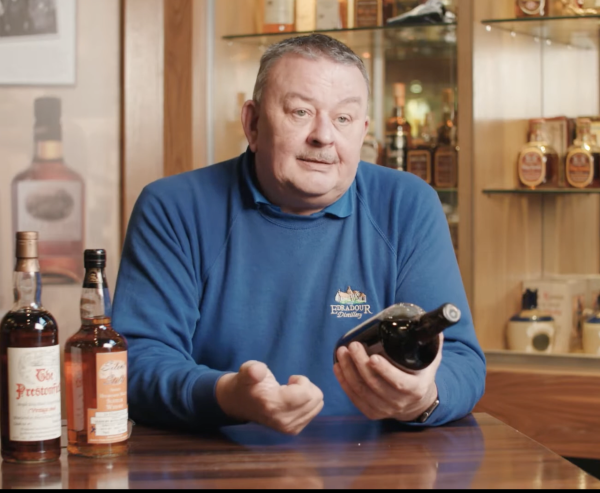
Thanks to his knowledge of Scotch whisky and the industry around it, Symington was in a position to co-found indy bottler Signatory Vintage Scotch Whisky Co. Ltd in 1988 – with the initial idea being that each bottle would bear the signature of a celebrity.
"It was during the 'whisky loch', so it was easy to get casks, and there wasn't really much competition – just Gordon & Macphail, Cadenhead's and a few pubs which would buy a cask and have it bottled."
Symington borrowed £100,000 from a bank to get the business started, and soon laid his hands on some special, even quirky, casks from less well-known distilleries, such as Glen Fagler, Ben Wyvis, St Magdalene, Port Ellen and Rosebank – all of which were closed at the time. "The market was more fragmented then, making it easier to knock on people's doors and ask for casks. Peter Russell (the late head of Ian Macleod Distillers), who I first met at Prestonfield, had hundreds of casks, and I bought a lot from him."
"I joined Food from Britain, which enabled us to exhibit at shows in various European cities, and from there we met people – importers and companies. It grew slowly." By the early 1990s the company had made a name for itself as a provider of great-tasting expressions of fine and rare whiskies, and for the transparency with which they were labelled.
Even though Russell repeatedly told Symington never to buy a distillery, he started looking at possible acquisitions in the late 1990s. After failed attempts to buy Ardbeg, Glencadam and Glenturret, Symington managed to acquire Edradour, then dubbed 'Scotland's smallest distillery,' from Pernod Ricard, paying £5.4m, including £3m for the stock.
Within five years, all the operations, including the bottling hall and warehouses had moved from Leith to Edradour. Then, in 2017-18, with Edradour subject to planning constraints as a B-listed building, he added a second distillery and a racked warehouse that houses 20,000 casks just up the Edradour Burn at a cost of £8.5m. Symington says: "If you combine the two sites, our capacity is over 500,000 LPA."
"I'm forty years in the industry this year, so we have a large stock. We've been investing in the stock all that time, we keep buying and buying and buying." He puts the company's stocks at 38,000 casks to which he's adding another 4,000. Such is the current oversupply in the market, "people are knocking on my door, begging me to buy," he claims. "Everyone's selling now."
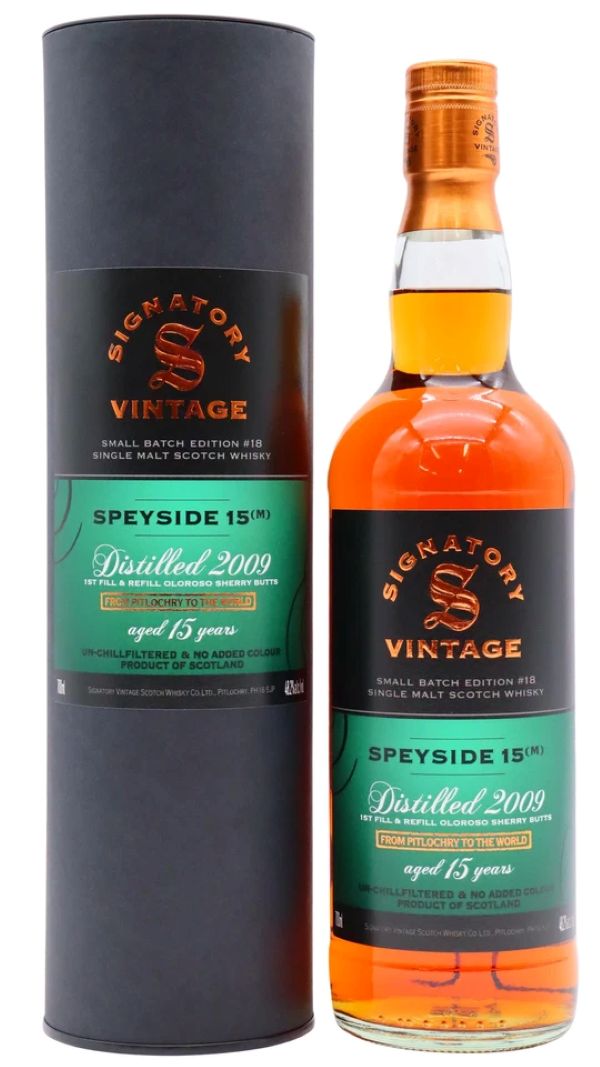
Signatory bought some £5m of Macallan stock in 2017 when Edrington was in need of cash. Prevented from using the Macallan name, he opted for "Speyside [M]" which earnt him the backhanded compliment of "clever bastard!" from Edrington CEO Scott McCroskie. Bottles including the 2009 vintage (17-year-old [M]) are available for significantly less than the Macallan equivalents.
"Permission to use the distillery's name can never be taken for granted. "You need to negotiate that with individual distillers," says Symington. However, the refusal of William Grant & Sons to part with any stock appears to rankle. "I suspect Glenn Gordon, (Grant's chairman), would prefer to let the ABV drift below 40%, (rendering it unsaleable as Scotch) before selling to someone like me!"
Because he invested in so much good quality stock when prices were low, he can afford to undercut many rival bottlers on price. "Some of the stuff that I have bought is on our books with buttons. Yeah. I mean 18-year-old for £2.20 per litre of alcohol. That was what it cost at the time."
He points out there's a bit of crisis in the industry with production down 50% this year, and significant numbers of distilleries going silent. "There are so many new distilleries and so much more stock swilling around." He believes the distillery building boom of the past decade was "crazy" at the time, and he still feels that way, especially given the lack of differentiation in their products in his view.
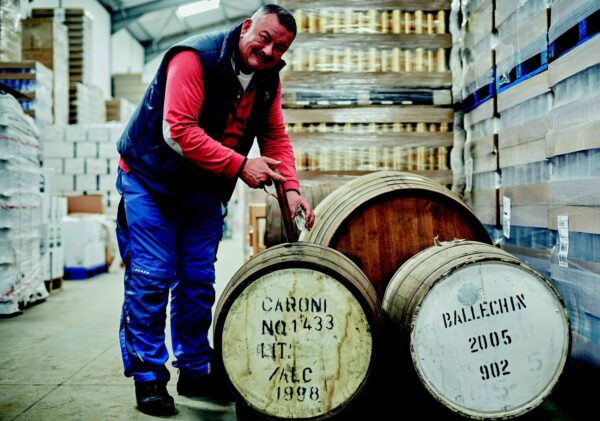
In the meantime, both Signatory and Edradour are "doing extremely well," he says. "We've found a lot of new markets in the last couple years in Asia – places like Vietnam and Malaysia, and Thailand has opened up for us."
In the full-year to March 2025, the combined business posted pretax profits of £11.55m on sales of £16.5m, marginally down on the previous year – with 26% of sales in the UK, 47% in Europe and 27% in rest of the world. Stocks were valued at £45.6m, net cash at £40.2m, and shareholders' funds at £102.4m. Some 40% of group sales come from Edradour, and the rest from Signatory - a split that's been consistent for 15 years.
Edradour was attracting some 55,000 visitors in 2008, but numbers started to fall after it started charging in 2011. He decided not to reopen to visitors after Covid, partly due to difficulties in hiring staff but also because opening seven days a week was becoming wearing for him and his German-born wife, Annett, who helps run the business. "It wasn't a difficult decision. But at least we found out what weekends are!" Staff numbers at the Edradour site have fallen from 48 to 14 as a result.
As I was about to head back down the A9, Symington told me that a couple of years ago he had received an unsolicited offer from a "top ten" whisky industry player for a nine figure sum for the combined business. However, he ended up turning it down because some of the conditions were untenable. So perhaps his two sons, Andrew Jr, who already works for the company, and Kristopher, who's still at school, might one day inherit the business after all.
Ian Fraser is a financial journalist, a former business editor of Sunday Times Scotland, and author of Shredded: Inside RBS The Bank That Broke Britain.