
Postcard from Madrid
Following its entry into the EU in 1986, Spain enjoyed a two-decade Scotch whisky boom. While other spirits, notably rum and gin, have since muscled in, Scotch is still leading the charge as Ron Emler reports…
While famed for its sangria and those giant 'copita' glasses brimming with gin & tonic, Spain is heavily into Scotch whisky. In fact, it is the country's most widely consumed spirit, accounting for 21% of total volumes and 25% of sales value in the 12 months to February, according to the latest Neilsen data.
Scotch Whisky Association export figures paint a variable picture over the past few years, showing an initial upsurge post the Covid lockdowns in 2022, when 67m bottles were imported as consumers indulged in "revenge hospitality", sliding to 59m in 2024 and 54m last year, as the market sought equilibrium.
Throughout the past five years, however, the value of those exports to Spain has risen progressively from a Covid-crippled £118 million in 2021 to £208m last year.
Diego Borras Moreno, one of Spain's leading spirits consultants and organiser of the annual Whisky Live event in Madrid, points out while volumes have fluctuated, the steady increase in sales values suggests a growing discernment with consumers willing to trade up.
On the other hand, "if a 15-year-old Scotch has shifted in price from €95 per bottle to €155, there is bound to be an impact on consumption (by value)," he says.

The SWA puts Spanish demand into context by saying that while the country consistently performs within its top 10 most valuable markets, it is "heavily reliant on the on-trade and that Spain's hospitality sector has been impacted by global increases to the cost of living which has reduced disposable income for both domestic and visiting consumers."
Even so, Spain's economy is thriving compared to most. It has been the fastest-growing major economy in the eurozone since 2024 — a performance it is expected to repeat this year, growing at an annualised rate of about 2.7%, compared with the EU's average of just over 1%.
Last year, Spain generated a fifth of the eurozone's overall growth and half of its total employment growth. Significantly, Madrid is Europe's third-largest capital measured by GDP, after London and Paris.
The total alcoholic beverages market is projected by Lexir Resources to grow by 6% a year until 2030, with beer leading the way but spirits improving its share of the market.
However, while spirits companies salivate about the surge in new, legal-age drinkers in India and parts of Africa, the demographic trend is on a downturn in Spain. The average age of its citizens has been rising constantly for the past 20 years, and is now 46. It is predicted to top 50 by 2050.
And yet Spain has two populations – the 47m Spanish and the almost 100m visitors who flock to the sun every year. This has a huge influence on the market for alcohol. While some areas of Ibiza and Majorca have introduced the "six a day rule" (three at lunch and three with dinner) for all-inclusive hotels to counter the drunken image of their tourist areas, IWSR believes that overall market is shifting to "less but better" in line with global trends.
There is a high growth rate in no/low alcohol products, with more than 40% of consumers engaging in the category, while there is also a continuing shift to lower-intensity, daytime and afternoon consumption, known as the Tardeo.
These trends mitigate against Scotch whisky, which has been slow off the mark in the increasingly important RTD category, as we have often noted.
"Spain is a slowly maturing market for Scotch", says Borras Moreno. "I believe we are the only European country in the European Union where in terms of whisky were are still "in the green'. We still have some growth and that makes us a very appealing market."
The Spanish consume twice the global average in terms of annual alcohol per capita, most of it via the on-trade. But whereas 46% of Britons claim to drink alcohol at least once a day, only 13% of Spanish nationals do so, according to a study of European patterns by STADA.
They are much less prone to "binge drinking" or "session drinking" than their northern European compatriots in the EU.
This is where the Tardeo has a significant influence on the tendency to take a single measure, usually as part of a High Ball or other long drink. It stems from the Tapas tradition of moving between locations.
"Spain is a conglomerate of many identities and different cultures when it comes to social interactions", says Borras Moreno. "We may just have a glass of wine with lunch and then on the way home call at a bar just for one drink. In the UK you 'drop anchor'; we are used to moving around, it's a very cultural element."
"With the growth of the cocktail phenomenon, we have some of the best popular bars in the world, and they help underline the trends in consuming spirits in completely different ways," he says. "That is playing a big part in recruiting women into Scotch whisky."
Paulo Guludjian, Diageo's managing director for Iberia, agrees that the most common consumption channel for whisky is via the on-trade where it is predominantly consumed mixed with soft drinks or in cocktails.
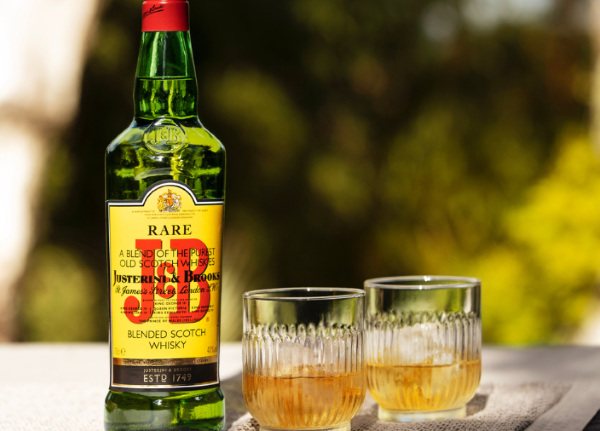
"Scotch whisky is the preferred choice in the Spanish market," he says, where Johnnie Walker and J&B sit in first and third positions in the sales league table.
But he also notes that "while Spanish consumers value premium products and more sophisticated cocktails, there is also a growing trend toward balancing quality with affordability."
"We are getting more curious about Scotch and drinking a bit better", says Borras Moreno. "The best word to describe it is 'maturation'. We had over 200 different whiskies and probably over 40 different distilleries represented last year at Whisky Live in Madrid. We expect at least similar numbers this year."
Alongside the rising prospects for Scotch in Spain, there has been a welcome reduction in counterfeits and faking, which was prevalent a decade ago. One major fraud incident was reckoned to have cost an unnamed leading brand of Scotch €4m in lost sales.
While international fraud remains a growing headache for drinks companies around the globe, the Guarda Civil and the Spanish tax agency have been mounting successful joint operations to curb it. The SWA has its own cooperation agreement with the Guarda Civil "which includes a commitment to share intelligence about suspicious products and companies."

Ron Emler is a financial journalist who has observed the drinks industry for 50 years. Following a career on The Times and the Sunday Telegraph, he is consultant City Editor at The Drinks Business.