
A Dram with Kirsty Black
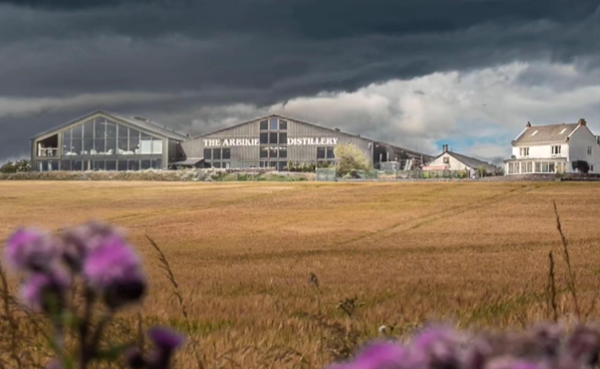
If Arbikie is one of the most genuinely innovative distilleries in Scotland, it is thanks to master distiller Kirsty Black. In an industry run by corporate bean counters, her curiosity and willingness to try new things is inspiring finds Tom Bruce-Gardyne …
"You know we were founded on the wonky potato," says Kirsty Black, master distiller at Arbikie. It was in 2014 that this farm distillery, just south of Montrose on the Angus coast, launched its first spirit – the Tattie Bogle potato vodka, triple-distilled from spuds rejected by the supermarkets.
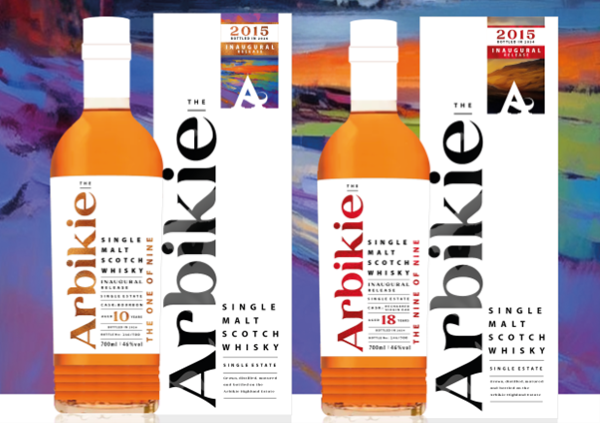
Then came gin, followed by Arbikie's deliciously spicy Highland Rye whisky, and finally a single malt – The Signature 10 year-old, due for release this summer. Kirsty, who was intimately involved in all of them, has been here from the start.
Having studied plant science and then worked as a quality engineer for Proctor & Gamble among others, she took a year out to do a masters in Brewing and Distilling at Edinburgh's Heriot Watt University. As a home brewer, her interest was rooted in beer until the second term when they got onto spirits.
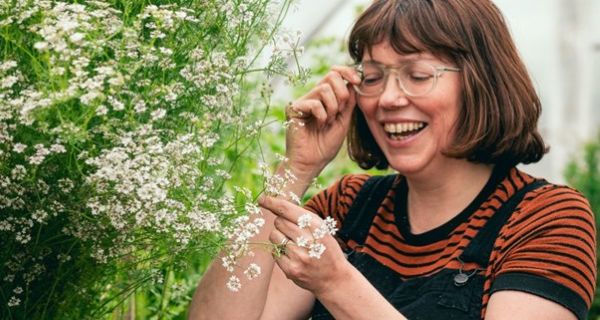
Remembering her first degree, she says: "I think that's when I realised, distilling combined all of that. Obviously, there are loads of beer recipes, but distilling is almost unlimited – you can take any plant and flavour spirit with it."
On meeting the brothers John, Iain and David Stirling who own the 2,000 acre farm, she didn't think their plan was crazy. "No, they had all the raw ingredients and they had experience in the industry," she says. "The first role I was offered was to build the distillery, and at that point I felt who's the more mad – them asking me to do it, or me for accepting? They certainly don't teach you that at Heriot-Watt."
The distilling equipment arrived from Germany "like a giant jigsaw puzzle." It all had to be bolted together, a bit like IKEA, "though with less good instructions," she says. Today, she has a pair of pot stills and a couple of column stills to play with and give vent to all her creativity and invention. Among other things, Kirsty famously distilled peas into Nàdar, the world's first ever climate positive gin.
The corporate route out of Heriot Watt is to become a distillery manager for one of the giants, and it sounds pretty dull by comparison. "Well, they've got a very different goal from us," she says. "Their goal is to produce a consistent product because that's what the consumer expects. It's a whole other skill set keeping it the same."
Sukhinder Singh, founder of the Whisky Exchange and now head of Elixir Distillers, worries about the industry's relentless drive to make whisky-making more efficient. "Of course, the process is tip-top," he told me. "But I'm sure the efficiency takes its toll on the final liquid."
"We want to be as efficient as possible in energy and water use, but we are willing to take a hit, maybe because we are smaller. If we drop output by 1%, that's only a few thousand litres lost over a year," she says. Clearly, if you ramp up production to Diageo-like levels, those losses would be untenable, at least to the company bean counters.
And talking of beans and peas, the reason they're so good to make alcohol from, is that they put nitrogen back into the soil which removes the equivalent of 1.5kg of carbon from the atmosphere per bottle. Never has gin drinking felt so virtuous, and yet it's not an easy story to tell.
Whether you love peas, or have hated them since school, "they are not exactly sexy," John Stirling admits. "And, you've got to be a bit science-based because if you are not, people will say 'Oh, that's just another story'. But too much science and people will doze off."
Kirsty believes distilling peas could be seriously scaled up, though the chances of it being allowed for, say, grain whisky, are remote unless there was some historical precedent. For now, she is doing some trials with whisky from oats which certainly did exist, and she's collaborating with Heriot Watt on a barrel-aged potato spirit.
A few years ago, Arbikie produced a thought-provoking film on its journey to becoming the most sustainable distillery possible, and how it all starts with the land and the way it's cultivated. Farming barley less intensely is clearly better for the planet, but can it also improve the flavour of whisky?
"This is what we're trying to explore now," says Kirsty, who explains how they have done some replanting with older, lower-yielding strains of barley that were once grown here. "We're still exploring the flavour aspects. We've distilled 100% of each variety, and we think there's a difference in the newmake, but we're figuring out whether that can carry through after being in a cask."
The whisky world tends to see grain purely as a source of ethanol. "When most distilleries are buying in barley, they have a spec, and want it to be the highest yielding in regards alcohol," she says. "I may be wrong, but I don't believe they care what variety it is. It's a commodity to them."
The industry could take the lead, and encourage less intensive farming with fewer chemicals if farmers were compensated for lower yields. As Kirsty says: "Farmers want to grow things the right way, and they'll grow what people want." And if it made for a more flavoursome whisky that was genuinely more sustainable, what's not to like?
As long as barley is simply a commodity that sounds unlikely, but it's food for thought all the same. With its own supply-chain from its surrounding fields, Arbikie is self-contained and feels rather removed from the current concerns of the whisky industry. It is slowly building up to an Arbikie 18 year-old, which will be its core single malt. But don't hold your breath – it's not scheduled to appear until 2034.
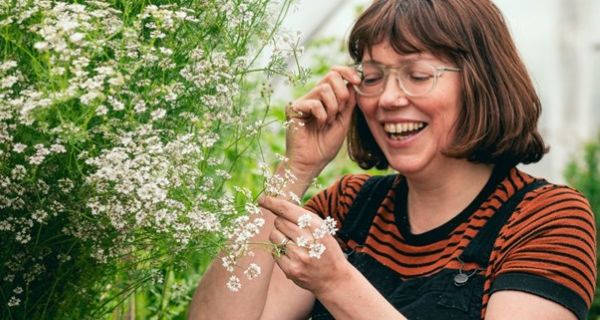
Award-winning drinks columnist and author Tom Bruce-Gardyne began his career in the wine trade, managing exports for a major Sicilian producer. Now freelance for 20 years, Tom has been a weekly columnist for The Herald and his books include The Scotch Whisky Book and most recently Scotch Whisky Treasures.
You can read more comment and analysis on the Scotch whisky industry by clicking on Whisky News.