
Banging on the Status Symbols
From deluxe blends oozing wealth and status, Scotch began chasing a younger demographic in America after the financial crash. That is according to Bacardi's Brian Cox who explains his enthusiasm for the new generation of US whisky drinkers to Tom Bruce-Gardyne …
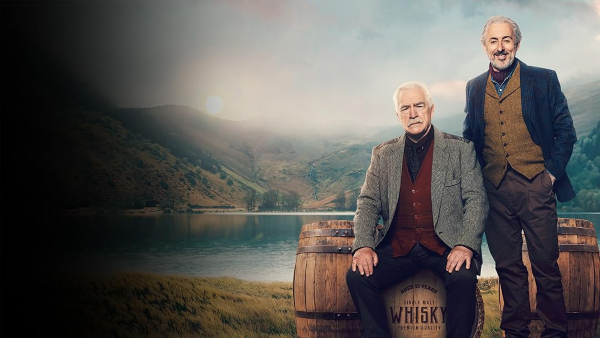
Google Brian Cox and whisky and you'll be taken straight to 'Glenrothan', a sweet-natured distillery drama set in the Highlands. It is the first film directed by the Hollywood actor and star of 'Succession' that was released here a few months ago as his 'love letter to Scotland.'
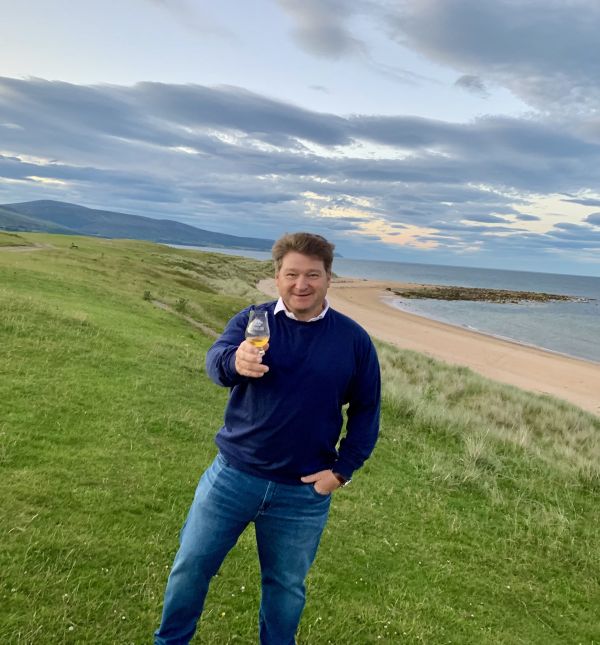
But his namesake – the Brian Cox who is global VP for Scotch whisky at Bacardi knows rather more about the subject, certainly in its most valuable market – the United States. Based there since 2007, Brian has remained loyal to the category but for brief forays into Belvedere and Stolichnaya vodka.
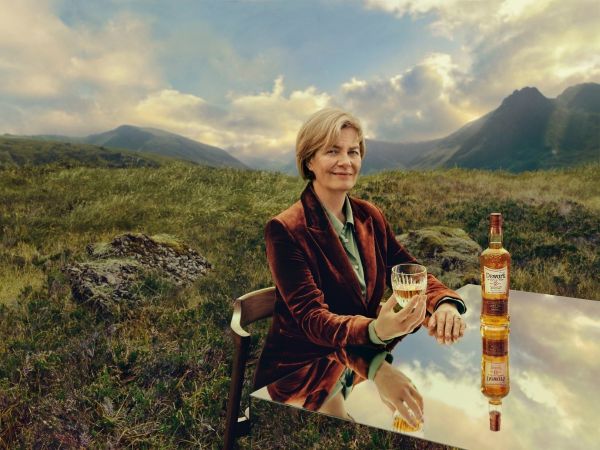
At Bacardi, Scotch means Dewar's, the world's fifth-biggest brand, and its price-fighting stablemate – William Lawson's at number six, followed by five single malts including Aberfeldy and Craigellachie.
Brian arrived in America just before the 2008 financial crash which he calls a "watershed moment" for the industry. "After the slightly vapid, carefree, 'easy money' values that led to that terrible crisis – the biggest economic shock since the Great Depression, I think there was a real rebasing of values, he says.
"I think there was a movement to more discernment and away from classic status, which had been the heartland of Scotch whisky brands." The great exemplar of this was, and perhaps still is, Chivas Regal with "its unabashed sense of 'we're making money'," to quote Chivas' marketing director, Nick Blacknell.
Johnnie Walker Black Label was always slightly more restrained as was Dewar's 12 year-old, while Dewar's, led by its flagship White Label expression, was once America's favourite Scotch.
The cultural changes after the crash benefitted dark spirits like Bourbon, and "the on-premise was moving away from that kind of 'Sex-in-the-city' vodka world to more craft cocktails like Old Fashioned's," Brian recalls. "I think that served single malts extremely well, and as an industry we leveraged that 'craft' to a consumer need."
In 2007, single malt sales were on 1.1 million cases according to the Distilled Spirits Council of the US (DISCUS). By 2010 they began to grow rapidly, reaching 2.1m cases by 2015, and peaking at 2.5m six years later. Meanwhile blends continued their stately decline – so what went wrong?
"As an industry, I don't think we understood clearly enough the change in the nature of status," says Brian. "Rather than reframe the values, the industry tried to change the consumer." He believes there was a pivot to a younger demographic and "a strategy that was more akin to entry-level rums and vodka."
From the numbers, this clearly didn't work. Before the financial crash, blended Scotch stood at 8.4m cases in the US. By 2017, it had slumped to 7.1m, and after six years of relative stability, declined again, hitting 5.7m in 2025 according to DISCUS.
"We weren't chasing the early 30's – to late 30's who have a different lifestyle and are more professionally driven," he says. "As a result, I think we missed a generation of recruitment which Bourbon and Irish whiskey didn't." American whiskey soared from 14.9m cases pre-crash to a peak of 31.2m in 2022, while the Irish went from 0.8m cases to 6.1m over the same period, slipping to 4.5m last year.
Asked if the decline in blends was somehow self-inflicted by an industry determined to push malts, Brian points to how there would have been separate sales teams involved, and says: "I don't think it was self-inflected, but it may have masked the issues in mainstream Scotch."
However, he believes the 'b' word may have uniquely negative connotations in America, "connotations you would not have in markets such as France, Spain or Germany." In the US the real bargain basement category is 'American blended whiskey' which can be up to 80% neutral grain spirit.
Under the 2009 Scotch whisky regs the words 'Blended Scotch Whisky' have to be "as prominent as any other description" on the label, which probably doesn't help 'Doo'ers' as it's known in the States.
So how is he trying to rectify the industry's mistakes and recruit new drinkers? "It's about targeting," he says. "It's about accepting the consumer segments, and marketing to them as they are, not as you might wish they were."
"It's about rejuvenating a brand to that age group of consumers and matching their lifestyle and affluence levels," he continues. "And meeting the key category needs, but then having an element of distinctiveness, and how you execute that through packaging, through sponsorship and below-the-line promotion."
He claims: "We have a significant premiumisation opportunity with Dewar's, and that remains our number one focus." This feels more a reference to markets like travel retail and those parts of Asia and Latin America where the 12 year-old and above have room to grow.
In the US, it's a different story, as he concedes: "When we talk of affordable luxuries these are not must-have items, and when cuts come, I think that's where economies are made in households." Blaming inflation, he says consumers "are not trading down by choice. They're trading down by necessity."
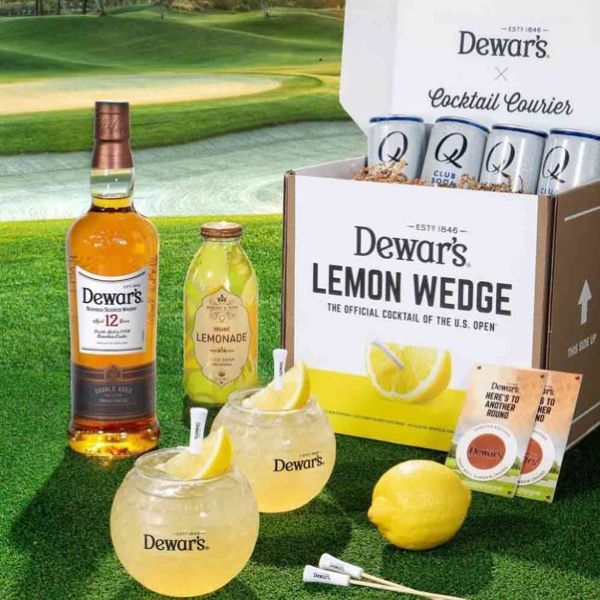
While other Scotch brands are currently chasing football, Dewars is sticking to golf. Dewar's Lemon Wedge is the official cocktail of the US Open where it's available as an RTD. While a Dewar's 12 YO Highball RTD has just been launched in Japan, the Lemon Wedge surely deserves a major US rollout given the country's insatiable thirst for anything in a can. "Let's just say – watch this space," Brian replies, though from memory that's what he said last time.
But having lost a generation of Americans, he is excited by the next generation of late 20s-30s who are far more relaxed about blends. "They're much more open, less formal and certainly more diverse."
Meanwhile the other Brian Cox, for all his whisky-soaked love letter to Scotland, made a sheepish confession in a recent interview to plug his movie. Given the choice, he prefers Tequila.
Award-winning drinks columnist and author Tom Bruce-Gardyne began his career in the wine trade, managing exports for a major Sicilian producer. Now freelance for 20 years, Tom has been a weekly columnist for The Herald and his books include The Scotch Whisky Book and most recently Scotch Whisky Treasures.
You can read more comment and analysis on the Scotch whisky industry by clicking on Whisky News.