
Tariffic News
Excuse the Tabloid pun, but trade barriers are coming down. America, Scotch whisky's most valuable market, has finally returned to zero tariffs. While India, its biggest by volume, has halved import taxes, to bring the drink a step closer to a thirsty population reports Tom Bruce-Gardyne …
It has been good news on Scotch whisky tariffs in recent days. Last Friday, that seemingly personal deal struck between President Trump and King Charles in May to scrap the 10% US levy, came into effect, and so did the halving of Indian tariffs the week before.
While the Scotch Whisky Association claims the US tariffs were costing the industry £4 million a week it's unclear whether sales will rebound by that amount, and how quickly. The mood among US consumers remains subdued.
Meanwhile, every drop of Scotch, be it in bottle or bulk for dribbling into Indian whiskies (IMFL), now pays just 75% tax on arrival in India. It's still a huge amount, but an awful lot less than the 150% of two weeks ago. Was Leonard Russell, MD of Ian Macleod Distillers which has been in the Indian market for over twenty years, dancing in the streets? Not exactly.
When I ask if he expects an explosion of pent-up demand, enough to drain warehouses across Scotland, he shakes his head. "No, I'm a bit more realistic than that. I believe the market will continue to grow and evolve, but the premium sector of brands that sell above 2,000 rupees (£15.60) is very small."
He has no doubt about the market's long-term potential following the tariff cut, but says: "I don't see the growth of bottled Scotch whisky being quite as rapid as you would imagine. Import duties are halving, but the retail price isn't going to halve."
It is certainly true that this vast whisky market is bottom-heavy. Pernod Ricard's Royal Stag which sold a staggering 32.6 million cases last year to overtake Diageo/United Spirits' McDowell's No.1 to become India's (and the world's) top-selling whisky, sells for 1,200 rupees (£9.40) in Bengaluru (Bangalore).
Scotch is almost twice the price for a locally-bottled blend like Teacher's Highland Cream on Rs2,200 (£18.30) in Bengaluru, while for bottled-in-Scotland Johnnie Walker Red Label the price jumps to Rs2,800 (£21.80)
So far, Rakshit Jagdale, MD of Amrut Distilleries, who produces one of the top Indian single malts, has yet to see any change, but "everybody is anticipating prices to drop," he says. Personally, he believes some Scotch brands will come down by 15-20%. It may not be enough to entice Royal Stag drinkers, but it brings Scotch a good step closer to those drinking more premium IMFL brands.
Sanjeev Banga, president of international sales at the big Indian distiller, Radico Khaitan, predicts it will be a couple of months before there are any price reductions, and that for Scotch the drop will be no more than 8-10%. "That is from some of the media statements by Diageo and Pernod Ricard, and from our own estimates," he says. "Let's not forget, customs duties are only one part, you still have all the State taxation."
In May, Karnataka – home to Bengaluru, became the first Indian State to tax drink by strength rather than value, and as Sanjeev says: "When you have taxation on the alcohol per centage, it is always the premium end that stands to gain."
Regardless of tariffs and tax, Indian whisky drinkers have been trading up for some time. This was the stated reason for Pernod Ricard India to offload its big-selling, low-margin Imperial Blue whisky in December 2025 to Tilaknagar Industries for €412.6m. The brand, with its slogan ‘men will be men', sold 22m cases in 2024, down from a peak of 24m two years earlier.
Pernod is facing a US$314m tax bill in India for allegedly undervaluing its Scotch imports in the past. Last week, for reasons unknown, it withdrew its challenge in the High Court and will now appeal to the country's tax authorities, while, in a separate issue, its brands are still banned in Delhi.
The French group insists it has done nothing wrong, but with ad valorem tariffs of 150%, there was a clear incentive to game the system, and other distillers have been investigated. Before 2007 when tariffs were a whopping 550%, the incentive was even greater. It was an era of rampant smuggling, and all manner of subterfuge. It was said that Johnnie Walker Black enjoyed eleven lives – a measure of how often the bottles were refilled with progressively cheaper spirit.
Jean Touboul, Pernod Ricard India CEO, talks of the twin tailwinds of the country's young demographic which means around 24m new potential consumers reach legal drinking age every year, and the robust growth in per-capita GDP that swells the middle classes.
What whisky they aspire to, is not a given as Leonard Russell recently discovered. "I have seen consumers buy premium IMFL in liquor stores in the Gulf instead of buying blended Scotch when the price is very similar," he says. "That's a shocker!"
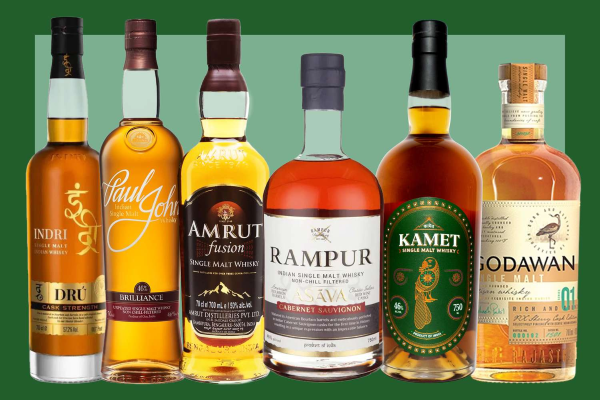
Well, not for Sanjeev Banga. As he told Whisky News in April about Indian consumers: "They are not just swayed by an import or a Scotch label; it's about the quality of the liquid inside." And in his view, that growing discernment explains why Indian single malts now outsell those from Scotland in India, in what is a small, but fast-growing category.
Indian malts jumped 22% to 500,000 cases last year, according to the ‘Economic Times', while imports (almost entirely Scotch single malt) were on about 350,000. "Pretty soon, I'm expecting [the category] to cross a million cases," says Sanjeev whose Rampur single malt is on allocation due to the level of demand.
With well-aged malts, Scotland does have an advantage with its Angel's share of 2% a year compared to 7-8% in India. When Amrut launched the country's oldest single malt – the 15-year-old Amrut Expedition in 2025, the angels had left precious little whisky in the cask. Just 75 bottles were released at US$12,500 each.
Last year India imported a record 25m litres of bulk Scotch malt, a figure Sanjeev predicts will grow as Indian producers release more premium expressions with a higher malt content. The margins may be meagre for Scotch distillers, but it all helps to syphon off the current surplus. And, as disposable incomes rise while the price of Scotch comes down, the gap between the two is narrowing by the day.
Award-winning drinks columnist and author Tom Bruce-Gardyne began his career in the wine trade, managing exports for a major Sicilian producer. Now freelance for 20 years, Tom has been a weekly columnist for The Herald and his books include The Scotch Whisky Book and most recently Scotch Whisky Treasures.
You can read more comment and analysis on the Scotch whisky industry by clicking on Whisky News.