
East Meets West
One of the industry's biggest customers for bulk whisky has come a step closer to the source by setting up its new Radico Khaitan Scotland subsidiary. It may even snap up a Scotch distillery if a good deal presents itself. Tom Bruce-Gardyne listens in …
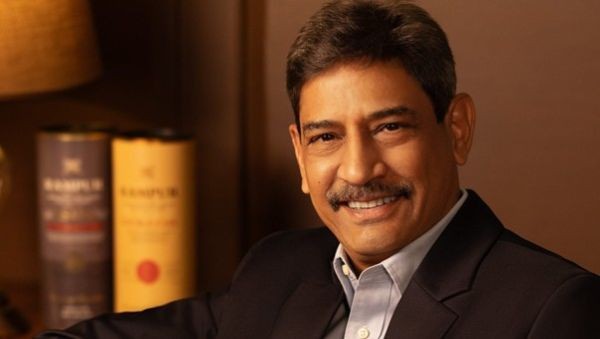
"We have just set up a subsidiary in Scotland," says Sanjeev Banga, president of international sales at the fourth biggest Indian distiller, Radico Khaitan. "We are one of the largest importers of Scotch malt in India, and we basically want to have the ability to take newmake spirit in Scotland and keep it for maturation over there. And, if the opportunities arise, we could possibly pick up a Scottish distillery as well."
Obviously, it's this last point that has excited most interest. Despite the 'ifs' and 'buts' about becoming a Scotch producer, there was no shortage of speculation when Radico Khaitan made the announcement in late January.
"Given the number of distilleries in Scotland currently struggling or underperforming, there are plenty of possibilities," the Dutch site, Whisky Monkeys pointed out, before inviting readers to write in with their suggestions.
Sanjeev is keeping schtum. "We are not commenting on that," he says. "We are not actively looking, but if we get a good opportunity, we may consider it." Clearly the first priority is to get closer to the source of the bulk Scotch malt that gets blended to make Radico's Indian whiskies.
The company's leading blend is 8PM, which was ranked sixth in the Indian whisky charts with sales of 9.6 million cases in 2024. The nocturnal theme is continued by its stablemate, another premium Indian whisky called After Hours. The night "brings a unique world of desire, adventure and excitement," Radico's website explains. "In fact, it's where the fun and action begins."
India completely dominates the trade in bulk Scotch malt whisky. In 2025, it imported 25m litres, measured in pure alcohol (lpa), over eight times more than the next biggest market - Japan. By contrast Indian imports of bottled in Scotland blends came in at just over 10m litres, although they were worth £101.2m compared to £93.8m for bulk malt.
For the Scotch industry it equates to an average of just £3.75 per lpa of bulk malt, compared to around £10 for bottled blends and £25 for single malts. So, the incentive to ship more in bottle is pretty clear, especially if Indian demand swells as anticipated when the FTA commitment to halve import tariffs finally comes into effect.
Is this what lies behind the new Radico Khaitan Scotland venture? A concern that supplies may run short? "No, on the contrary," says Sanjeev. "There is surplus Scotch malt whisky, and in fact everyone is approaching us to buy malt from them, so we're in a good situation at the moment."
He is certainly in the right country when it comes to economic growth and youthful demographics. In its Q3 results (October – December) Radico Khaitan's sales were up 16.7%, while its profits soared by 62% according to Reuters who quoted the MD, Abhishek Khaitan, saying: "Demand for premium liquor is outpacing cheaper brands as younger consumers shift to high-end drinks, even when drinking less than the older generation. People want to spend on good things in life."
The country has a caste system for whisky every bit as complex as Indian society. Scotch may have been the pinnacle to aspire to, but Sanjeev Banga believes consumers have changed. "Today, they are not just driven by whether it's a Scotch or a non-Scotch," he says. "Indian consumers have become very knowledgeable. They are not just swayed by an import or a Scotch label; it's about the quality of the liquid inside."
When the tariff reduction to 75% actually happens, possibly next month if the UK government can get its act together, Radico Khaitan will be paying less for its bulk malt. It then faces a choice, as he explains: "Either you pass that benefit onto the consumer, or you improve the quality of the liquid by adding more malt to it."
Some of the bulk shipments from Scotland are for locally-bottled blends like VAT 69 and 100 Pipers. Sanjeev claims that top Indian whiskies are "giving them a run for their money" and that "a lot of them are now priced at a premium to bottled-in-India Scotch."
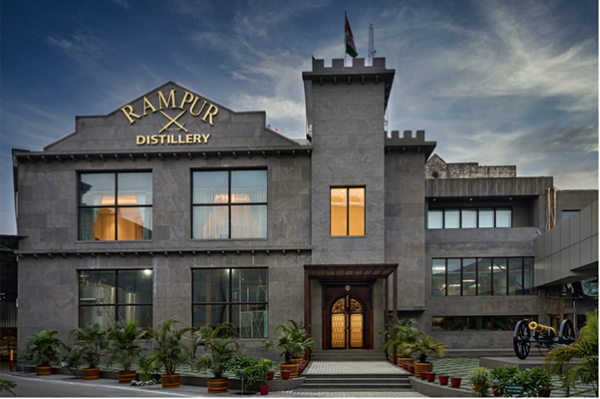
He adds that: "Last year Indian single malts outsold Scotch single malts in India," which he sees as further proof of a growing discernment in the market. Talking of Radico's Rampur single malt that was first released in 2016, he says: "The response has been amazing. Honestly, it's been on allocation because we could not fulfil the demand. So, we tripled our malt distillation capacity a couple of years ago."
Rampur also contributes to Sangam, the company's 'East meet West' world malt whisky that was launched in 2023. The distillery's current capacity of close to 4m lpa a year puts it on a par with Tamdhu and Aberlour, though well below giants like The Macallan or Glenmorangie.
The impact of halving the tariffs remains to be seen. "But, let's not forget, it's not just the central customs duty, there is also the state taxes," says Sanjeev. "Our anticipation is that for BIO (bottled in origin) products, the reduction may not be more than 5-7% on the retail price." Even so, it certainly won't harm Scotch whisky's biggest market by volume that was up 15% last year, a market where the thirst for premium whisky, whether homegrown or imported, appears, at least for now, to be almost insatiable.
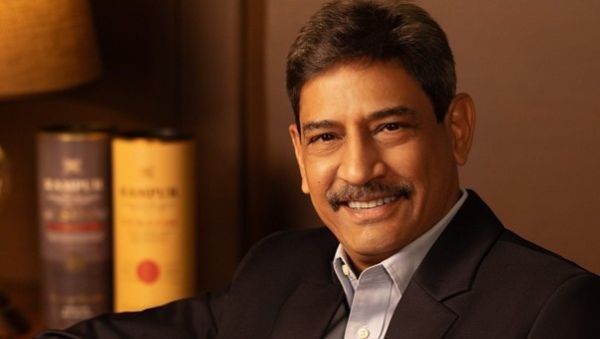
Award-winning drinks columnist and author Tom Bruce-Gardyne began his career in the wine trade, managing exports for a major Sicilian producer. Now freelance for 20 years, Tom has been a weekly columnist for The Herald and his books include The Scotch Whisky Book and most recently Scotch Whisky Treasures.
You can read more comment and analysis on the Scotch whisky industry by clicking on Whisky News.