
Barley Blues
While grumbling is not unknown among Scottish farmers, those growing barley for the whisky industry have good cause for grievance reports Ian Fraser. What with tumbling prices and ripped up contracts, the mood on the farm is grim …
Life is tough for Scotland's barley growers right now. The downturn in global Scotch whisky sales (exports have fallen nearly 20% by volume and 13.5% by value from the peak year of 2022) has caused many distillers to "pause" or reduce their production at distilleries across Scotland.
The effects for barley farmers have been ruinous, but not that widely reported outside the agricultural press. Last August and September grain merchants – middlemen who sit between distillers and maltsters on the one hand, and farmers on the other – started playing hardball, rejecting large quantities of barley which they were supposed to be contractually obliged to buy, forcing barley prices down in the process.
"Suddenly the big [Scotch whisky] players were saying "we're not going to take this". The maltsters went "Oh"; the grain merchants went "Oh my God" and the farmers were faced with an enormous amount of rejections," says John Stirling, co-founder and co-owner of field-to-bottle distillery Arbikie, near Montrose.
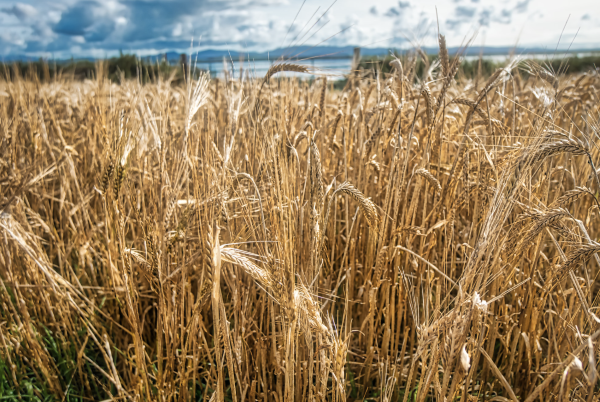
"A dry summer led to minor imperfections in the barley crop, including slightly higher nitrogen content, slightly more screenings (small grains), slightly more skinnings (outer husks detached from grains)," explains Stirling. He believes this made it easier for grain merchants to reject, sometimes on semi-spurious grounds, large percentages of the barley which they had agreed to buy. In Angus, one of the best barley-growing counties, rejections were running as high as 80% at one stage, claims Stirling.
Farmers were left with little choice other than to sell it as 'feed' barley for not much more than £100 a tonne, as opposed to 'malting' barley for £180-£200 per tonne (down from £230 in 2024). Such a price is below the cost of production. The only alternative was to pile it into sheds for storage.
"Last August and September farmers discovered the contracts they had with merchants weren't worth the paper they were printed on," says Stirling, whose own business farms 2,000 acres and produces a range of spirits, with a single malt due to be launched as an 18-year-old this summer. He has opted to cease growing any barley for third party distillers.
The imbroglio has caused a breakdown in trust and casted a pall over the entire barley supply chain, with many farmers vowing never to grow barley again, and switching instead to wheat, oilseed rape and oats. Stirling says that barley contracts for 2026 harvest are "virtually non-existent".
David Michie, head of NFU Scotland's Food and Farming policy team, says: "I've spoken to grain traders and maltsters about the way the distillers ripped up long-term, three-year agreements, and they have described their behaviour as legally questionable". However, none has yet taken a distiller to court, partly because distillers are such critical customers.
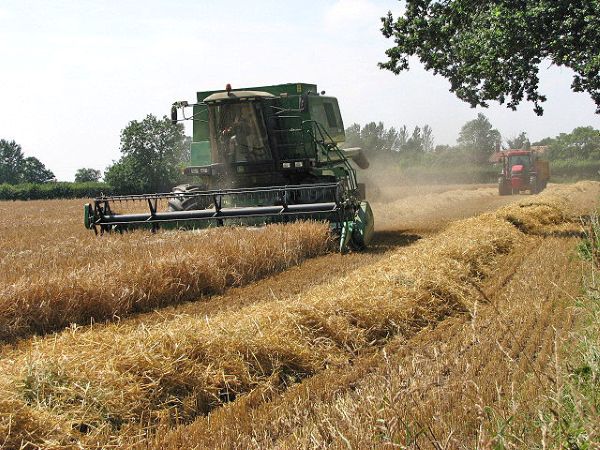
The surplus barley from the 2025 harvest means that maltsters – businesses, often owned by overseas agribusiness giants, which process barley into malt for brewing or distilling – will be using last year's grain in 2026. Michie says: "We have this situation where we have lots of grain sitting with maltsters, and merchants, but also in farmers sheds and they're going to have to shift it by harvest time. I'm concerned this massive oversupply could crash the market." He adds that the current hiatus in the barley market is hitting farmers at a time when the cost of "inputs" including fertilizer and fuel have gone through the roof as a result of the start of the Third Gulf War.
One danger is that the current abundance of barley – still Scotland's biggest crop, with one-third traditionally destined for the Scotch whisky sector – will soon become a scarcity. Stirling says: "Long term, as farms focus on different crops, the amount of malting barley will decrease significantly. Then someone in the whisky industry will wake up and say, "Oh, 'we don't have enough Scottish malted barley"."
Many in farming are campaigning for farmers to be given fairer treatment. In its response to a UK government consultation on "combinable crop contracts" which was launched last December, the NFU said it wants to see enforceable contracts, fair mechanisms for resolving disputes, proportionate testing and rejection processes and greater collaboration across the supply chain. NFU Scotland vice-president Robert Neill, who farms 1,700 acres in the Scottish Borders says the consultation is a crucial moment for barley growers, adding "the message from our members is clear – words must now lead to meaningful reform. For too long, growers have shouldered the risk in an increasingly dysfunctional market." Defra says it is considering responses and will set out next steps later this year.
Stirling goes further, calling for the introduction of a logo or similar visual device which distillers could have on their bottles and outer cartons to demonstrate that their product is made with 100% Scottish-grown barley. There are parallels with food and drink assurance schemes such as Red Tractor, FairTrade and Marine Stewardship Council.
He believes many smaller Scotch distillers as well as Moët Hennessy-owned brands Glenmorangie and Ardbeg would quickly get on board with such a scheme, and that it would pressurise larger distillers – which have been known to switch to sourcing barley overseas when the UK price goes up – to be more transparent. "It just needs a logo and a sign up. The Scottish NFU ought to be the prime mover for this."
For his part, NFU Scotland's Michie suggests, while such a scheme is viable for single malts, it could never work for blends. "I see no reason why single malt distilleries couldn't use 100% Scottish barley." But he doesn't believe the proposed assurance scheme could work for grain distilleries such as Diageo's at Cameronbridge and William Grant & Sons' at Girvan, whose output is a major component of blended Scotch, as "Scotland doesn't have the agricultural capacity to feed them".
Stirling's main worry is that unless Scotch barley farmers are treated more fairly, the whisky industry will in future be unable to source sufficient quantities of barley from local growers for its needs, undermining its cachet as a product made in Scotland.
Ian Fraser is a financial journalist, a former business editor of Sunday Times Scotland, and author of Shredded: Inside RBS The Bank That Broke Britain.