
Grain to Glass – Logistics
To complete our series on whisky's long journey from field to bottle, Ron Emler explores logistics through the lens of the industry's biggest player – Diageo. It's a complex business, and given the febrile state of the world, getting ever more so …
People give little thought to what happens to Scotch whisky once it is bottled – it just appears on a retailer's shelf or behind a bar. But getting it there is a huge logistical exercise.
The Scotch Whisky Association says some 1.4 billion bottles are exported every year to more than 160 national markets. That's the equivalent of 44 70cl bottles every second. Hardly a day passes without a whisky cargo leaving Grangemouth, where spirits (mostly Scotch) are the port's fourth largest category after petrochemicals and their derivatives.
While the vast majority of whisky is bottled in Scotland and shipped in containers capable of holding 3,000 cases, there are also strong markets for bulk whisky to the likes of India, the US and South Africa at higher strengths up to 60% abv. There the whisky is diluted to standard 40% abv or added to local products like Indian whisky.
But most Scotch leaves Scotland in bottle, which means shipping costs play a significant factor in the economics of the industry. After all, it was Johnnie Walker himself who developed the eponymous brand's iconic square sided bottle to maximise the available space for transportation.
For Kedar Ulman, supply chain director for the Scotch Category at Diageo, delivery is a hugely complex operation employing 3,000 people worldwide.
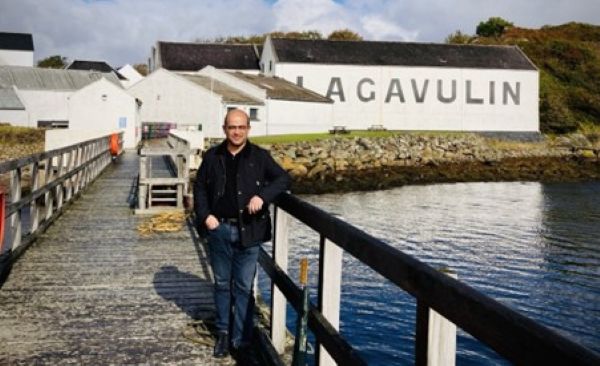
Every year Diageo exports the equivalent of about 40m cases of Scotch whisky, and it is Kedar's responsibility to ensure they get to the right destination, correctly labelled for any one of more than 200 different country and regional markets, and above all on time.
"It's not an easy task. It's a complex mix involving approximately 1,200 SKUs (Stock Keeping Units)," he says. More than 500 alone are for the Johnnie Walker range.
Each brand and style have various formats from miniatures through to litres and above. "The front label is by and large generic. It has the brand name and brand claims plus details such as strength. But the back label is very complicated because it is designed to cater to local regulations," he says. There are also myriad differing legal requirements for excise duty tags.
"So, if it's going to the US or to India or China for that matter, the back label will change and every one will result in a different SKU," he says.
India and the US, for instance, are further complicated by being federal countries made of states with their own individual alcohol laws and tax regulations. In India consignments must have "export" and "import" clearance simply to cross boundaries between two states.
America's three-tier distribution system means no alcohol producer can sell directly to retailers, a structure that generates its own unique complexities.
To comply with the myriad local requirements with the minimum of complication, Diageo ships by container to massive, intermediate depots where the loads can be broken down by final destination and labelled appropriately.
In the US, Kedar ships through up to 15 different ports to almost 50 separate distributors who are then responsible for local compliance and wholesale delivery.
Elsewhere, however, the distiller is usually responsible for meeting the legal requirements of a specific market.
So, although the US is a key market in terms of range premiumisation and profit, the biggest volumes go through what Kedar calls "disaggregation centres" or local finishing depots in Mumbai, Shenzen, Kenya and Panama where loads are broken down, segregated and labelled for onward delivery to Diageo subsidiaries or local distributors.
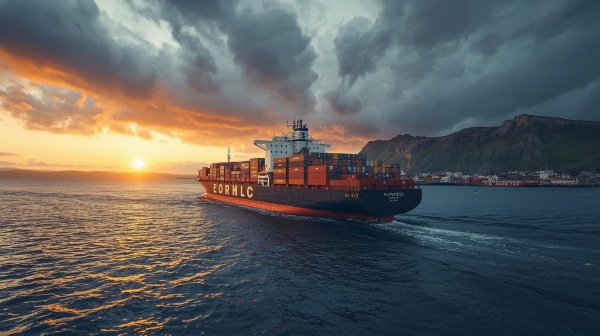
Approximately a quarter of all Diageo's whisky exports pass through the Panama facility, which is the centre for Central and South America and the Caribbean, while Shenzen services China, Taiwan, Malaysia and the rest of South East Asia. Mombasa is the hub for Eastern Africa.
"This is to service to markets which have significantly less than a container load requirement. Sending a container full of material to them might cover them for two, three years, which we don't want. We don't want to load markets with inventory," Kedar says.
There are also separate distribution hubs in established major markets throughout Europe and the rest of the world, but wherever demand is insufficient to fill a container, the load will be completed with other Diageo products such as gin or vodka and occasionally with another distiller's whiskies.
"If it takes three different liquids to fill a container [for a distributor], we will do it," Kedar says.
However, managing the complex global pattern is changing. "Digitisation is fundamentally changing the supply chain," he says. "We can have all kinds of information on a QR code, which is available once you scan it. It has the potential to reduce my SKUs to a much smaller number."
"It will take some time before markets actually use it because governments have to accept it, but that's the future for us."
Diageo is also deploying NFCs (Near Field Communications) on its spirits bottles to further simplify the need for multiple labelling.
As well as reducing the need for relabelling, increased digitisation also enhances brand security with counterfeiting now one of the biggest threats to premium spirits, especially those with a global franchise. With the forgers becoming ever more sophisticated, the greater the digital complexity means the greater the challenge to the international criminals, an argument that appeals to governments seeking to maximise their tax revenues.
While optimising the efficient use of transport and delivering the correctly labelled bottles to the right markets is one factor in the supply chain, so is organising production of loads in Scotland.
The lead time for bottling any order of whisky from Shanghai, San Francisco or Santiago is about two weeks. The complex part of the logistics chain is then determined by geography.
"For Europe, shipping could happen in a week," Kedar says. "But an order from, say, Japan, could take two months to reach the shelves." Managing these timescales is critical to seasonal sales peaks.
"Contrary to perception," Kedar says, "in the Scotch supply chain, December is not a very heavy time for production because most has been produced and dispatched." His busiest time is the early autumn.
Lead times can also be affected by international conditions and geopolitical pressures as well as the vagaries of weather. For instance, when the giant container ship Evergreen ran aground and blocked the Suez Canal in 2021, Diageo asked its shippers to divert around the Cape of Good Hope, adding at least two weeks to the journey to Asia.
"That was not desirable but doable", says Kedar, saying that the associated headaches were mitigated by a satellite tracking system that allows him to pinpoint exactly where 96% of Diageo's shipments are in real time, allowing customers to know an ETA for their supplies.
Ron Emler is a financial journalist who has observed the drinks industry for 50 years. Following a career on The Times and the Sunday Telegraph, he is consultant City Editor at The Drinks Business.