
Improving the Bottom Line One SIP at a Time
Reducing the losses from maturing casks clearly matters when you have millions of them. Diageo has been employing SIP, its new innovation to do just that, while using the same platform to extract the most value from the market. Ron Emler endeavours to explain …
Taking a fresh look at age old practices can yield benefits over time but it is rare for a new system to be hailed as "transformative" within three years of being conceived. Yet that is what Diageo has achieved with its Spirits Intelligence Platform (SIP) according to the judges of the prestigious Gartner Power of the Profession Award for Technology Innovation.
It scooped the 2026 award for being a "game changer" delivering significant, quantifiable business value in the production of Scotch Whisky.
SIP does this in a number of ways. It uses data and AI to reduce the 'Angel's Share' and improve maturation yields, as well as extracting the most value for premium whiskies through a digital marketplace. It also synchronises cask-to-bottle flows of wood and whisky to improve so-called 'liquid logistics'.
Kedar Ulman, Diageo's supply chain director for Scotch, points out that mitigating maturation losses across more than 10 million casks not only preserves the volume of sellable liquid which itself adds to profitability but also contributes to the group's drive to increase its green credentials. More spirits available to the blenders, he claims, means less water and carbon used in distilling the same useable volume and the 'Angels' Share' emissions are cut to the minimum consistent with prime quality whisky.
While SIP harnesses AI, Diageo insists it enhances the craft skills of distillers and blenders by giving them more insight into how to deploy their talents to maximum benefit. It all merges into a system to get the most from the company's most valuable asset – its liquid – at the same time as preserving the artisanal elements that give Scotch its unique identity.
"Craft is the middle part between art and science", says Ulman, "SIP is going to give the blenders so much more information about the product they are working with and far more flexibility in terms of what they can access. We are enhancing the science, which enhances the craft. We definitely want to preserve that because it is our (Scotch Whisky) distinctive competitiveness."
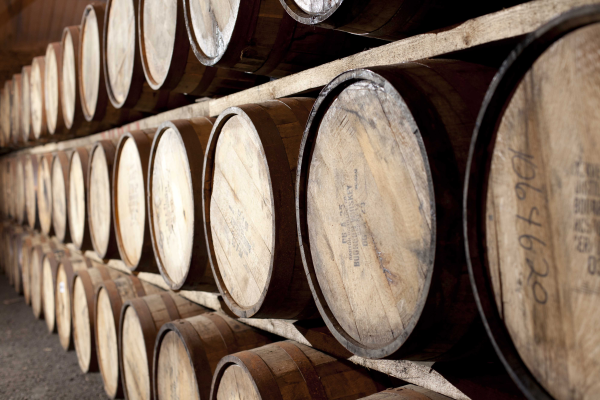
Diageo began with a skeleton database from production readings it had taken over the past 13 years but it is augmenting that exponentially every year. The cornerstone is a unique QR asset tag affixed to every cask as it comes for first fill plus every older one as it is disgorged for blending or bottling. This stays with the cask for life and data is added to it at every stage of the maturation process to give a detailed picture of what is happening to spirit in each and every cask and why. The metrics are myriad ranging from the final quality of the liquid down to where and how the cask was stored or even how it was disgorged.
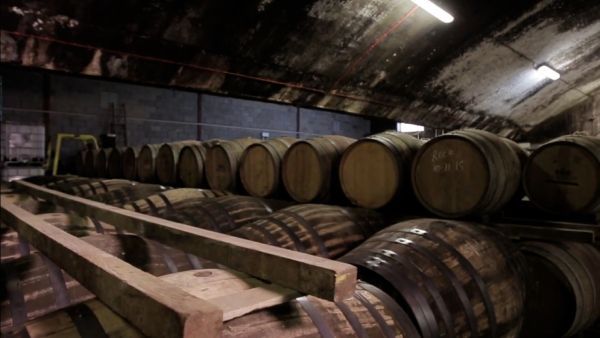
"For instance, the warehousemen would tell us by instinct that a particular spot was best for our most valuable liquid because the loss rate was lower there," says Claire McKendrick, head of Scotch strategy, speaking at the huge Blackgrange site near Alloa. "Now we can prove it."
"The target is to put the most valuable newly distilled liquid into 'gold standard' casks," says Kedar. And as the database keeps growing "AI and machine learning will become advanced enough to say that the 'golden' rules we have defined are not good enough. That is a last layer on the cake which will come in when the final phase of SIP is implemented next year."
SIP's second role is "what we call optimal pre-bottling allocation," he says. "Each market will have an allocation of, say, Lagavulin 16-year-old, of which supply is very limited. We don't want to give it out where you don't make the best returns.
"Now we can allocate this digitally in a very dynamic way. If a market cannot sell it all, it puts it back onto our trading platform where everyone can see it is available and "bid" for it." The system then "scores" the requests for extra stocks and the algorithm pinpoints where the margins and profitability are highest. We can then bottle the Lagavulin for that market."
He uses the example of likely Christmas demand falling below expectations in 'market A'. If the initial allocation was bottled, shipped and left on retailers' shelves, Diageo would not get maximum value from a scarce and valuable commodity. But if an opportunity for extra sales in 'market B' could be met rapidly at the pre-bottling stage and catch that Christmas market, it would.
That is because the data is not in separate silos but instantaneously visible globally. The previous manual spreadsheets were incapable of that. SIP has made the system very agile." So, SIP is driving toward minimising losses through leakage and evaporation on the production side at the same time as generating maximum value from the consumer end of the spectrum in virtuous circle controlled from the cloud.
Diageo is coy about the actual numbers in these early days of SIP but it does not take much imagination to calculate that even a very marginal reduction in loss from 10 million casks plus an uplift in sales revenue will eventually add up to many millions of dollars a year on the profit and loss account.
SIP has already evolved. Initially named the Scotch Intelligence Platform, it has become the Spirits Intelligence Platform. Peter Black, who runs the Digital Supply Chain programme and data analytics capability, says "We've got lots of other products starting to come through in terms of data automation."
Maturing Tequila and American whiskeys in very different climates and locations will provide insights that can be fed back into Scotch production. "It's got a long runway of value going," he says.
As Ewan Andrew, Diageo's president of global supply chain & procurement, says. "The digital and data foundations we have built through SIP position us to unlock even greater potential in the future, enabling growth, protecting long-term asset value and strengthening financial performance."
Ron Emler is a financial journalist who has observed the drinks industry for 50 years. Following a career on The Times and the Sunday Telegraph, he is consultant City Editor at The Drinks Business.