
Whisky for the Long-Haul
Plans to revive Coleburn have coincided with Scotch whisky's current downturn - albeit boosted by King Charles's recent US visit. But, being built on a sustainable scale as part of a new whisky resort, the Speyside distillery has plenty going for it, reports Tom Bruce-Gardyne …
Having endured four days at the court of 'King' Donald, our own king flew home as the hero of the whisky industry. "The Royal visit got me to do something that nobody else was able to do," crowed President Trump as he pledged to remove the 10% tariffs that are costing distillers around £4 million a week according to the Scotch Whisky Association (SWA).
When and if it will happen remains to be seen, and no-one seems to know whether the reprieve extends to single malts which face a catastrophic return to 25% tariffs in July, as part of the separate Airbus-Boeing dispute. Meanwhile, everyone has been jumping on King Charles to share some of the credit for the latest move, from the SWA to Scotland's First Minister, John Swinney.
Of course, such tariffs should never exist in the first place, as the US Supreme Court ruled in February. Added to which, their shambolic implementation and the endless threats to increase them whenever this notoriously thin-skinned President feels slighted, have only fuelled the instability of doing business with the States. How on earth do you plan anything?
For those bold enough, or possibly mad enough, to want to start a new whisky venture in Scotland, the timing appears terrible, and not just because of our current political and economic woes. Scotch warehouses are bulging with maturing stocks, and exports have slumped in value from the £6.2 billion of four years ago.
"You've got to look at a longer time-span than the peak of 2022," says Keith Cruickshank of the mothballed, and soon to be re-opened distillery of Coleburn on Speyside. "I remember when exports were at £2-3 billion." Last year they came in at £5.4bn. "Is that such a big issue?" he asks. "Or is it going back to where it realistically should be?"
Keith joined the industry when the last great whisky loch was still being drained. He spent 26 years at Benromach, the Speyside distillery that closed in 1983 and was reopened by Gordon & MacPhail in 1998. "We started on 132,500 LPA (litres of pure alcohol), which everyone laughed about," he says of Benromach's annual production which is now just under 500,000 lpa.
"But it took fifteen years for Benromach to increase, because they allowed the brand to grow, and the distillery to grow with the brand," he explains. The plan for Coleburn is to produce initially just 100,000 LPA a year when the stills are fired up, hopefully next year.
While Isle of Arran might dispute his claim that "Benromach was the first of the new artisan, craft distilleries," it was certainly an early pioneer. "Over the last two or three decades a lot of young distilleries have sprung up," he says. "My view is that craft distilleries are a very healthy addition to the industry. I don't believe they are flooding it. Instead, I think they've allowed more choice. What they're doing is very niche."
Alongside this has been the rise of the so-called 'super distilleries.' "Some of them are almost at the level of grain distilleries, and are producing huge amounts of single malts," he says. "I believe maybe some of the bigger ones have pushed volumes quite aggressively."
While Keith is too discreet to mention names, it is clear we're talking of the Glenlivet's, Macallan's and Glenfiddich's of this world whose gung-ho expansion in recent times now feels questionable. Even ten years ago, Glenlivet's 21m LPA capacity felt unsustainably huge to me, but its master distiller Alan Winchester pointed out that capacity doesn't necessarily mean production. "My car can do 150mph, but I don't drive it at that speed," is how he put it.
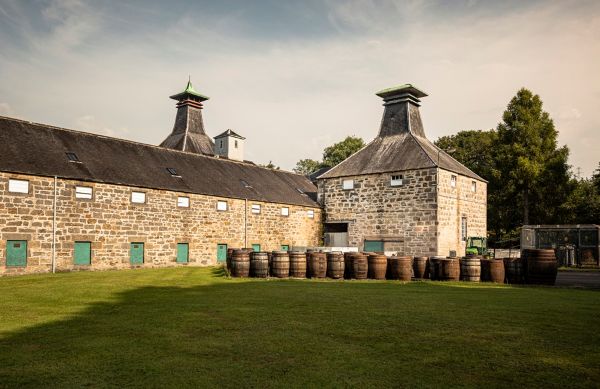
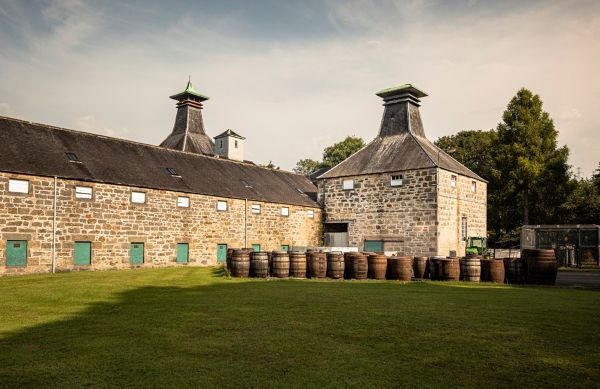
Coleburn, built in the gold-rush years of the 1890s, is a handsome, pagoda-topped Victorian distillery. It was absorbed into Diageo's predecessor – the DCL in 1925, and its malts disappeared into blends like Johnnie Walker Red Label. Its first official bottling was not until 2000 as a 21 year-old 'rare malt', fifteen years after the distillery was closed.
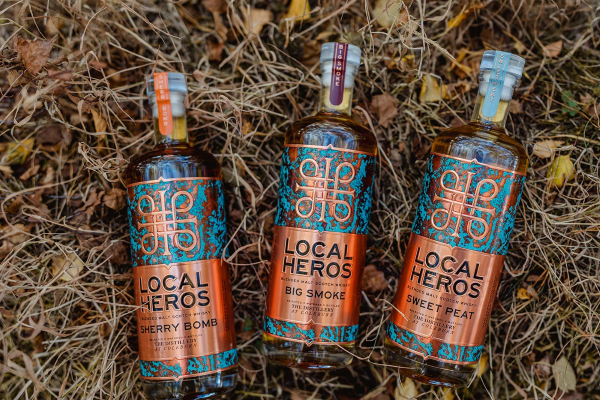
Proposals were submitted to convert the buildings into housing but they came to nothing, and in 2004, brothers Mark and Dale Winchester (no relation) bought the site. There were ambitious plans for a hotel, spa, concert hall, shops and a possible distillery. According to Keith "their business model slightly changed into whisky cask management and bottling." In 2025 they released a trio of blended malts called Local Heros.
Things have moved on. The current plan "is to build a twenty-first-century Scotch whisky resort on heritage foundations and to let the distillery, landscape and community grow into something genuinely new," wrote Adam O'Connell in the Master of Malt blog in December. "This is a place to stay, eat, drink, wander, breathe, and taste the full life of a working distillery."
Reviving Benromach involved "retro-fitting an old distillery with kit," Keith explains. In his view, taking the same approach at Coleburn would have been the "romantic thing to do" but impractical. "Now, with all the regulations on health and safety and the environment, it just wouldn't work."
That said, Coleburn was clearly well-built and well-maintained unlike many silent distilleries from the same era. Later this year, all being well, people will be able to eat and drink in the new bistro, and later stay in the Pagoda penthouse, while the spirit from the new, purpose-built distillery next to the original one slowly matures. We will be into the 2030s by the time the new Coleburn single malt is ready to drink. By then Donald Trump will be pushing 90 and still in the White House. Hopefully not!
Award-winning drinks columnist and author Tom Bruce-Gardyne began his career in the wine trade, managing exports for a major Sicilian producer. Now freelance for 20 years, Tom has been a weekly columnist for The Herald and his books include The Scotch Whisky Book and most recently Scotch Whisky Treasures.
You can read more comment and analysis on the Scotch whisky industry by clicking on Whisky News.