
The Lure of the Highlands
With distillers able to make any style of single malt they want, regardless of location, are 'whisky regions' still relevant? And if not, what's the alternative? Tom Bruce-Gardyne delves into this old debate, and discovers that the Lowlands have an image problem …
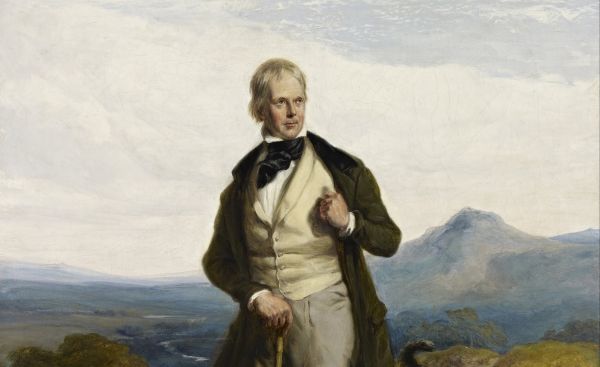
For almost two hundred years the Lowlands have been eclipsed as a region and as a whisky. It began with the Victorians who were seduced by the romantic lure of the Highlands through the novels of Sir Walter Scott and the example set by their Queen at Balmoral.
It was in the Highlands that many would have had their first dram, and before long countless Scotch whisky labels featured a clan chieftain or pipe band against a backdrop of misty lochs and mountains.
Tourists continue to flock north to brave the midges and rain, and today even the most flea-bitten B&B in Fort William, will have 'no vacancies' in August. More fool them, you might say. In their migration up the A.9, they are missing out on the beauty of the Scottish Borders, for instance, whose roads are not clogged with caravans and tour buses in summer.
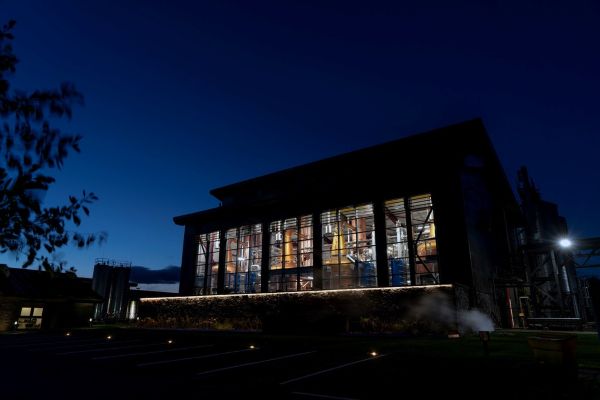
John Forsyth co-founded the Borders distillery in Hawick in 2018, and restored whisky-making to the region after a drought of 181 years. Being lumped in with the 'Lowlands' has never appealed. In his view, there is still a stigma about it when it comes to whisky. "Simply in marketing, the word 'high' is more attractive than the word 'low'," he says. "It's like which would you rather be - tall or short?"
For years he campaigned to have the 'Borders' officially recognised as a whisky region, but he has come to realise "it's more nuanced than I understood. The difficulties of getting these things changed are not to be underestimated because we are governed by an Act of Parliament, and there are compromises available."
Alan Park, director of legal affairs at the Scotch Whisky Association (SWA) explains how with the five whisky regions – Lowlands, Highlands, Speyside, Islay and Campbeltown "it took until 2009 to define them in UK legislation in the Scotch Whisky Regulations."
"The main reason for including them in the regulations was to protect them from misuse around the world. It is common to find spirits produced by others misusing the fame of these traditional regions to sell their products and having them so defined has helped tackle these problems."
So, when the Grand Traverse distillery in Michan released its Islay Rye whiskey a few years ago, the SWA's legal eagles could swoop. Instead of profiteering from Islay's good name, it now calls itself Isles O'Rye.
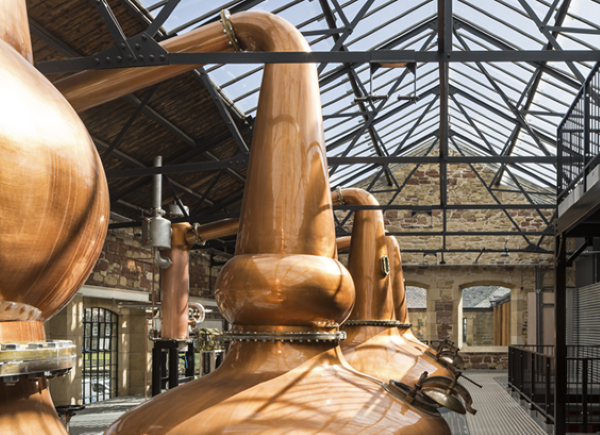
As for the compromises, it appears there's no problem with putting "Borders single malt whisky" on your label "as long as the Scotch whisky was entirely distilled in that place," says Alan Park. But for John Forsyth, the issue is more about how his whisky is displayed, which is typically on a shelf marked 'Lowlands'.
He mentions World Duty Free. "That's how they divide up the products on offer," he says. "Clearly from a retailer's perspective, this has resonance for the consumer which I think is important to recognise." But how much it informs them about the style of whisky is another matter.
"I don't think it makes a lot of sense," he says, pointing to how "a lot of Speyside distilleries now have a 'peat week', and you've got unpeated Bunnahabhain on Islay. My own personal view is we're slightly missing a trick here. We want to be more precise because consumers value people and provenance as a way of thinking about product."
By definition, single malts are all about provenance and the small community involved in production. And that community is obviously enhanced if it's more than just distilling going on.
"If the barley comes in, we mash it, we distil it and we send it out, it doesn't have a lot of connection to the place," Bruichladdich's master blender Adam Hannett once told me. "For us it's quite important, just for authenticity." So, unlike others on Islay, Bruichladdich matures and bottles its whisky on site, and sources some of its barley from the island.
For the new wave of distillers, being authentically local and transparent about it is very important. "If you look at our website, we'll tell you how far away are the farms we get our barley," says Forsyth.
It is an ethos shared by Isle of Harris, Raasay and Torabhaig in the Hebrides, and by the cluster of new distilleries in Fife that have also lobbied, so far in vain, to be a recognised whisky region and break free from the 'Lowlands'.
"For me, Fife is about provenance, it's not about flavour," says Ian Palmer of Inchdairnie. "We've adopted the view that if we're going to put Inchdairnie on the bottle, the cereal will be grown in Fife, and it will be matured in Fife."
The whisky writer Dave Broom is no fan of the 'region as flavour' approach. As he told me: "The problem I've got is that it doesn't actually hold up to any intellectual scrutiny." We agree that consumers need signposts to navigate the ocean of malt whisky, but my problem with his alternative of categorising by flavour as in 'rich', 'spicy' or 'fruity', is that it just becomes marketing.
The Johnnie Walker Experience seems to want it both ways. Visitors complete a quiz to see if they are 'creamy', 'spicy' or 'fruity' before being introduced to the 'four corners of Johnnie Walker', as in rugged 'Highland' Clynelish, smoky Caol Ila from Islay and gentle Glenkinchie from the Lowlands.
This is brand marketing on a grand scale, that persuaded Diageo to invest £185 million in whisky tourism in 2020 – a decision that almost certainly wouldn't have been made today. It supports some much-needed far-flung jobs, even if the visitor centre at Clynelish has sadly closed.
The regional approach is obviously flawed, and vast areas like the Lowlands need breaking up. It may not tell you much about flavour, but at least it points towards provenance and people, and to the diversity of Scotch. On a more prosaic note, it means that Sainsbury's sell an own-label 'Highland' malt, beside one marked 'Speyside' which is better than a simple Sainsbury's single malt. It's double the amount of whisky for starters.
Award-winning drinks columnist and author Tom Bruce-Gardyne began his career in the wine trade, managing exports for a major Sicilian producer. Now freelance for 20 years, Tom has been a weekly columnist for The Herald and his books include The Scotch Whisky Book and most recently Scotch Whisky Treasures.
You can read more comment and analysis on the Scotch whisky industry by clicking on Whisky News.