
A Dram with James Mackay
From selling rum at a dollar a bottle in the Philippines to rare whisky casks in Singapore, James Mackay's career has followed the same premium path as the industry. Over a dram at the Scotch Malt Whisky Society, he tells Ian Fraser why premiumisation will endure …
As an undergraduate at Trinity College, Oxford (1990 – 1993), James Mackay says he "wouldn't have been seen dead" with a whisky as it was "Dad's drink" – hopelessly unfashionable compared with vodkas such as Absolut. It was only after he moved to Asia, in his twenties, that he developed a taste for Scotch. He has since become one of its most passionate and informed advocates.
Soon after graduating, he bought a one-way ticket to Hong Kong, determined to live somewhere where neither his father – a peripatetic Shell employee – nor his older brother had worked. After a period of bartending, he joined the investment bank Jardine Fleming.
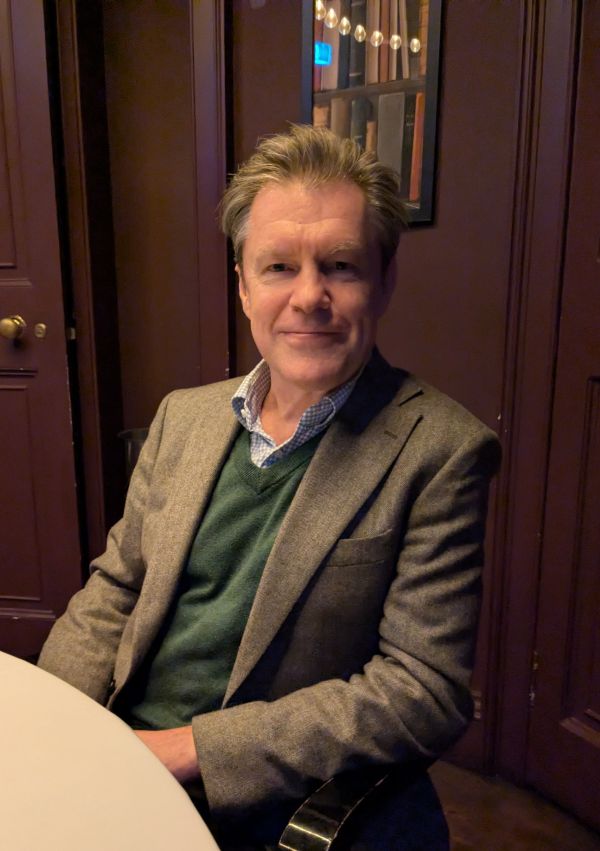
However, he soon decided the drinks business would be more fun and got a job with a distribution joint-venture that Jardine Matheson ran alongside Bacardi-Martini and Moët Hennessy in the Philippines. His first role was helping run a local rum production venture and marketing the resultant liquor to the Filipinos.
He then discovered that selling booze was a lot harder than making it, and after a year schlepping around the Philippines, meeting bar owners and experimenting with guerrilla marketing, he was appointed marketing manager of Jardine Wines & Spirits in the country, overseeing a wide range of imported brands including Moët & Chandon and Dom Pérignon.
Though partners in the venture, Bacardi and Moët Hennessy had strikingly different views of "luxury", Mackay recalls. Bacardi would be disappointed if fewer than 100 people attended a promotional event, whereas Moët Hennessy thought more than 20 was too many. He credits his boss Mark Bedingham, MD of Jardine Wines & Spirits (Asia) and later of Moet-Hennessy Asia Pacific, for helping "to shape the whole spirits market in Asia."
In 1999, he relocated to Taiwan as deputy general manager of Jardine Matheson’s drinks business there. Jardine’s were agents for William Grant’s whose regional manager, John Fordyce (who later co-founded The Borders Distillery), helped him develop his taste and knowledge of whisky.
At the time, Taiwan had become "the template of how to build an export market of increasing sophistication" and the category he focused on – single malts – was going through the roof.
Independent bar owners were crying out for older, rarer expressions of single malt whiskies such as Balvenie. "William Grant's were quite surprised when we started ordering high-age Balvenie instead of container loads of Grant's blend!" he says. While there, he also launched Glenfiddich, which became the country's top-selling single malt after Glenmorangie within three years.
Jardine Matheson exited the drinks business in 2003, and Mackay ended up back in Hong Kong where he set up his own consultancy, James Mackay & Co, working across spirits and other luxury categories, with a sideline art business painting murals on the walls of Alfred Dunhill shops.
"It was the beginning of the big push into premiumisation, and a lot of that was down to James Thompson, who was running Diageo Reserve (the firm's luxury portfolio, then based in Singapore)," he says.
In 2015 he joined Diageo, and within days was entertaining groups of ultra-high-net-worth clients in its plush office in Singapore. He was soon selling them entire casks from closed distilleries like Port Ellen and Brora for millions of pounds. "That made waves back at the London HQ," he says.
"I was told you mustn't sell casks as an investment, so we presented them as a passion purchase… the whisky equivalent of owning your own racehorse rather than just going to the races." He believes some of the reputational issues that have dogged the cask sector in recent years have stemmed from bad actors who have ignored this distinction.
Having run Diageo's private-client business out of Singapore and then Amsterdam, he persuaded his bosses that Edinburgh should be its global HQ given that around half of what clients were buying was a sense of connection to the distilleries.
After almost three years there, he jumped ship in January 2025, to become private client and commercial director for Artisanal Spirits, parent company of the Scotch Malt Whisky Society. Since then, he has established a new business within the company called Artisan Casks, which places the emphasis on carefully-managed casks, full traceability and long-term stewardship.
Mackay has witnessed the decades-long drive to premiumisation from the inside and believes there is more to come. "I started out making bottles of rum that cost $1 a bottle, and I think probably the most expensive bottle of whisky that I was involved with at Diageo was more than £50,000. That's quite a journey. And that wasn't just me. That was the whole industry."
He says he's "still seeing a lot of the same people" (among the wealthy), and insists they've not lost interest. Meanwhile he refutes Dave Broom's view that the industry became so obsessed with "ultra-premium, limited-edition stuff" that it neglected the mainstream. "That's not true because very good quality, affordable whisky continued to be made and sold all along," he says. "I think what changed was the focus on the advertising and the PR. There were probably a lot more articles written about super expensive whisky than before."
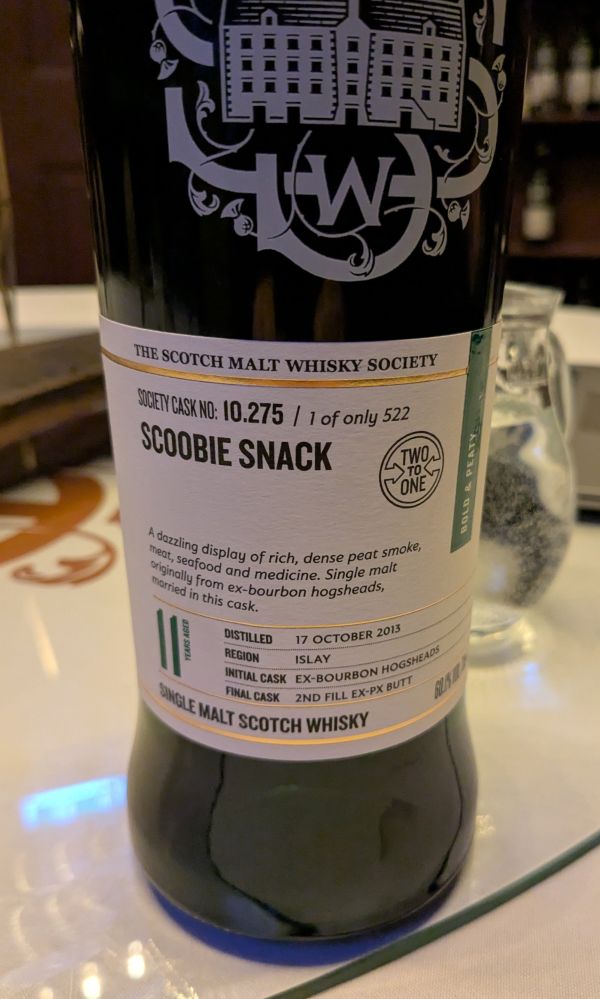
Despite the storm clouds over the industry, he is "cautiously optimistic" and says "the 'doom and gloom' is overdone. We may be in the dark before dawn, but dawn will come." Our conversation at the Society's elegant Georgian premises in Edinburgh was fuelled by a 12-year-old "Scoobie Snack" Islay single malt and a truly excellent 21-year-old Bowmore. Mackay, who just celebrated his first anniversary in his new role describes both as "good examples of what a company like Artisanal can do, which the big blenders cannot."
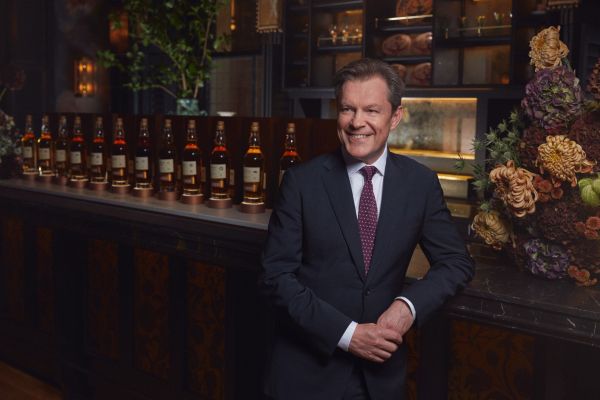
Ian Fraser is a financial journalist, a former business editor of Sunday Times Scotland, and author of Shredded: Inside RBS The Bank That Broke Britain.