
Postcard from China
While the Chinese cut in whisky tariffs made headlines, there's a much bigger, more interesting story to tell about Scotch in this crucial market. As Tom Bruce-Gardyne reports – despite recent ups and downs, the omens look good …
On his recent state visit to China, Sir Keir Starmer, still prime minister at the time of writing, announced that the country's import tariffs on Scotch whisky would be halved to 5% from this month. The UK government claimed it would boost the economy by £250 million over the next five years.
The news was reported as a victory for the trade which indeed it is, except that an important part of the backstory was widely missed, as drinks industry consultant Leo Austin, who spent over twenty years living and working in mainland China, was quick to point out.
"Let's just remember that they only raised them from 5% to 10% in January last year," he wrote in a post. "That was done without warning, purely to create a negotiation piece they could give away today. We haven't actually gained anything. I'm sure they have gained a lot."

James Mackay, another experienced China hand and now commercial director of Artisan Spirits, says of the tariffs: "I don't see it as a huge game changer." A much bigger driver it seems, is the way Chinese drinking culture is shifting in favour of Scotch.
It is here that the real potential lies, although China's current economic woes and President Xi Jinping's renewed crack-down on conspicuous consumption are not helping. Last May, the anti-corruption drive of 2013 which hammered luxury imports for years, was updated. Thrift and frugality are back in, lavish banquets and the schmoozing of government officials with fancy Cognacs and single malts are out.
Chinese Baijiu completely dominates spirits consumption, particularly over dinner according to Leo Austin. "In 99% of occasions whisky wouldn't touch the table," he says. Only after dinner, in whisky and karaoke bars, did Scotch and Cognac make an appearance. The next market in importance was "gifting, but only to those known to be whisky or Cognac-lovers," he says. And that was followed by home consumption.
Scotch has a long history in China. As James Mackay explains, his old company of Jardine Matheson was importing White Horse whisky in the 1930s. "Spending power saw a dramatic jump when China joined the WTO," he says. That was in 2001, and it caused import tariffs to tumble from as high as 100%.
Cognac was by far the leading imported spirit, but "it tends to be more traditional, and is drunk at weddings and formal occasions," says James who believes whisky is a much more dynamic category. Leo agrees, and points to clear evidence of a generational shift.
"Cognac was extremely dominant in Guangdong in South China, and to some extent in Fujian, opposite Taiwan. It was something that could be drunk at the dinner table it was so advanced in those regions," he says.
Whereas he feels a typical comment from today's younger consumers would be more like: "My dad was drinking Cognac for all those years, and he'd come home with a red face, half drunk. I'm never going to touch that rubbish. I drink whisky."
As of 2024, both spirits were on around 30 million bottles in terms of direct exports to mainland China, although Cognac was worth about £400m compared to £161m for Scotch. Last year, in part because of an EU-China trade dispute over electric vehicles, Chinese imports of Cognac fell 18%.
While unknown volumes of Scotch pour in from re-export hubs like Singapore, we known that direct exports grew steadily to breach the £100m barrier in 2019, the year single malts overtook bottled blends, having jumped ten-fold in value within a decade. By 2022 shipments had soared to £233m, propelling China into a top five market, but two years later it had fallen to tenth in the export charts.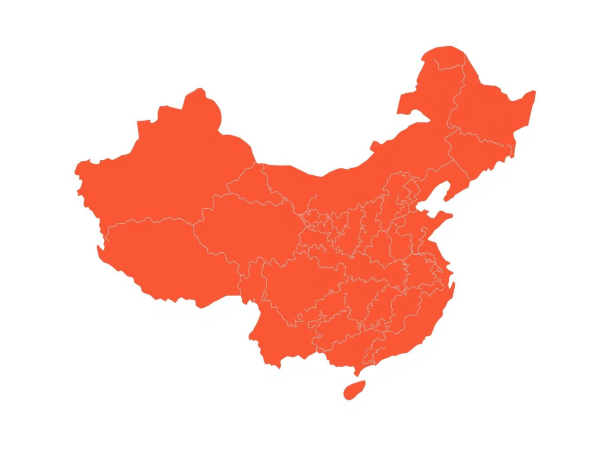
These booms and busts hide an underlying trend, however. The Chinese have been slowly developing a taste for Scotch whisky. Back in the 2000's when Johnnie Walker Black Label battled the lead brand Chivas Regal in Beijing nightclubs, the taste was often masked in a cocktail with green tea.
Leo characterises the period as being "very promotion-heavy" and says the drink "didn't get a lot of natural consumer adoption." He traces the genuine interest in whisky to 2015 starting with the surge in Japanese brands whose labels could be read by the Chinese.
The soaring price of whiskies like Yamazaki and Karuizawa was a major pull factor, as it soon was for malts like The Macallan. "The investment urge is an unbelievably important part of premium spirits in China," says Leo, who reckons that 'investment whisky' was about half of all whisky in China from 2019-23. Since then, the country's secondary market for Scotch has imploded.
He also reckons the number of whisky bars has probably halved, and those that remain have morphed into cocktail bars. Conspicuous consumption in restaurants has evolved into inconspicuous consumption in people's homes away from prying eyes and cameras.
In his view, this is driven by an economic depression as much as the president's anti-extravagance agenda. "The numbers coming out of China are not necessarily indicative of the real situation," he says. "Apart from hi-tech, A.I, data centres, electric cars and defence, every other sector is in a very bad state right now."
Yet the interest in prestige whisky keeps growing, and James Mackay sees parallels with the earlier boom in fine wines. He feels top single malts offer a similar aura of sophistication and craft as Bordeaux's Grands Crus, with perhaps The Macallan playing the role of Château Lafite.
Meanwhile the Chinese, along with Diageo and Pernod Ricard, have been furiously building their own whisky distilleries as if to replace the need for Scotch single malt? James thinks not, as does Leo who says: "In principle there are 48 projects of which around 20 are really happening."
He explains that most are boutique operations, with just three of any size who "are years away from producing significant volumes of aged whisky. The demand for Scotch will benefit immensely from these new distilleries over the next ten years, because they'll be surviving on tourism as visitor experiences and developing the taste for whisky."

Award-winning drinks columnist and author Tom Bruce-Gardyne began his career in the wine trade, managing exports for a major Sicilian producer. Now freelance for 20 years, Tom has been a weekly columnist for The Herald and his books include The Scotch Whisky Book and most recently Scotch Whisky Treasures.
You can read more comment and analysis on the Scotch whisky industry by clicking on Whisky News.