
Eye of the Storm
The economic headwinds facing the industry grew increasingly stormy throughout the year, with mounting costs, trade barriers and tumbling consumer confidence. And yet as Ian Fraser concludes it wasn't all doom and gloom in 2025 …
It has been one of the most challenging years for Scotch whisky since the great 'Whisky Loch' overflowed in the 1980s. Distillers have been buffeted by global economic instability, Donald Trump's imposition of fresh tariffs, an enfeebled secondary market, more price-sensitive consumers, oversupply issues, increasing competition from foreign whiskies and other geopolitical disruptions. And it has not helped that members of Gen Z and Millennials are said to be cutting their alcohol consumption, as are users of the weight-loss drugs Monjaro and Wegovy.
Distillers have been cutting production to suit tougher times. Diageo halted production at its Roseisle maltings and paused distilling at Teaninich near Alness. Moët Hennessy-owned Glenmorangie halted production at its Tain plant and is unlikely to resume before the spring, while Kentucky-based Brown Forman, owner of Glenglassaugh and Benriach, has been operating only one of these distilleries at a time since early 2025, and slowing production at Glendronach. Meanwhile Bairds Malt is closing its Pencaitland maltings plant with the loss of 19 jobs. It's a long way from the expansionist mood that prevailed across the industry when we published Feeding the whisky boom three years ago.
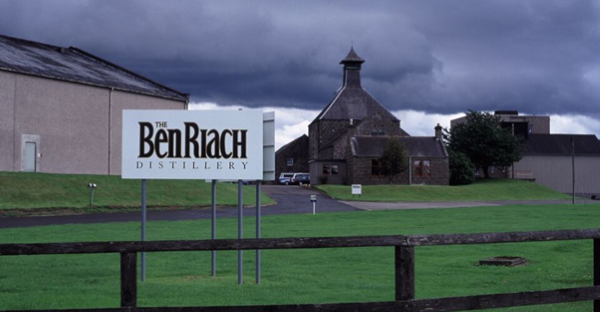
The collapse of the secondary market for Scotch whisky, first highlighted by the Financial Times over a year ago and covered in this interview with Noble & Co CEO Duncan McFadzean in October, is having knock-on effects. Whisky writer Dave Broom, interviewed in July, said he welcomes the corollary that the premiumisation bandwagon appears to be hitting the buffers. "People are not buying at the very top end. I think the market has been so skewed towards super-premiumisation that the image of Scotch in particular shifted in people's minds that whisky was a super-expensive spirit."
Then Rachel Reeves threw a spanner in the works with her recent budget, declaring that duty on Scotch be hiked in line with RPI inflation, for the second year running, from next February. The government claimed this "balances the important contribution of alcohol producers and the hospitality sector to our culture and economy, with the duty's role in reducing alcohol harm." However, the Scotch Whisky Association CEO Mark Kent said the move puts "huge additional pressure on a sector suffering job losses, stalled investment and business closures."
Glenallachie master distiller Billy Walker, said: "I've been in the industry for more than 50 years and rarely, if ever, has there been a time of such peril to the long story of Scotch — tariffs overseas coupled with increasing tax and regulation in our home market."
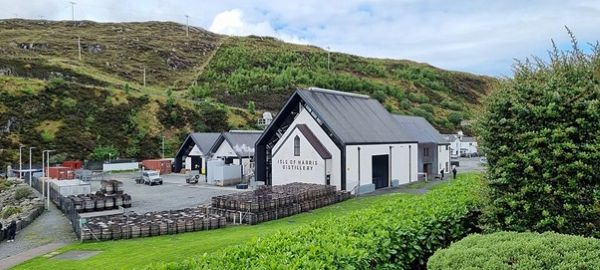
Even before the budget, Interpath Advisory's Alan Flower was predicting trouble ahead – including corporate insolvencies, distillery mothballings and mergers – especially among less established players. During 2025, Inchdairnie Distillery merged with MacDuff International and announced redundancies, Eden Mill went through a corporate "phoenixing" or prepackaged administration, and Isle of Harris and Rosebank distilleries both announced layoffs. The SWA says about 1,000 jobs were lost across the Scottish part of the industry from October 2024 to September 2025.
Yet it is not all doom and gloom. In a piece headlined The slow rhythms of Scotch piece, we concluded that — bad as it may seem — 2025 remains a long way from being as devastating for the industry as the glut of 1979-86. Scotch whisky retains a stronger cachet in international markets than rival spirits categories and, for historical reasons, has a much more diversified geographic footprint, meaning downturns in markets such as China and the US can, at least in part, be outweighed by upticks in others such as Turkey.
And in terms of the latest round of US tariffs, Britain got off comparatively lightly. On 5 April, days after his "Liberation Day" announcement, Trump slapped a 10% baseline tariff on all UK imports – significantly lower than the 15% levied on EU imports. UK distillers remain hopeful that the 25% US tariff on single malts – suspended by the Biden administration in June 2021 for five years – does not return to haunt them next summer.
Easily the biggest positives of 2025 was the signing of the UK-India Comprehensive Economic and Trade Agreement in July. This will reduce tariff barriers on Scotch exports to India from their current 150% level to 75%. However, the reduction won't happen until the agreement is formally ratified by both sides some time in 2026. After that, it should be a steady reduction down to 40% over the next decade.
Amrut Distilleries managing director Rakshit Jagdale holds by his earlier prediction that volume exports of Scotch to India will more than treble as a result.

Leading Scotch firms appreciate the need to maintain their advertising and marketing spend during leaner times. Glenmorangie and Laphroaig both unleashed major new campaigns in 2025, respectively featuring the Hollywood stars Harrison Ford and Willem Dafoe, while in November Diageo launched the latest iteration of its Johnnie Walker "Keep Walking" campaign.
Perhaps appropriately given the current state of the market, this included the exhortation "Keep Breathing."

Ian Fraser is a financial journalist, a former business editor of Sunday Times Scotland, and author of Shredded: Inside RBS The Bank That Broke Britain.